Just send us your questions or concerns by starting a new case &
we will give you the help you need. Start Here...
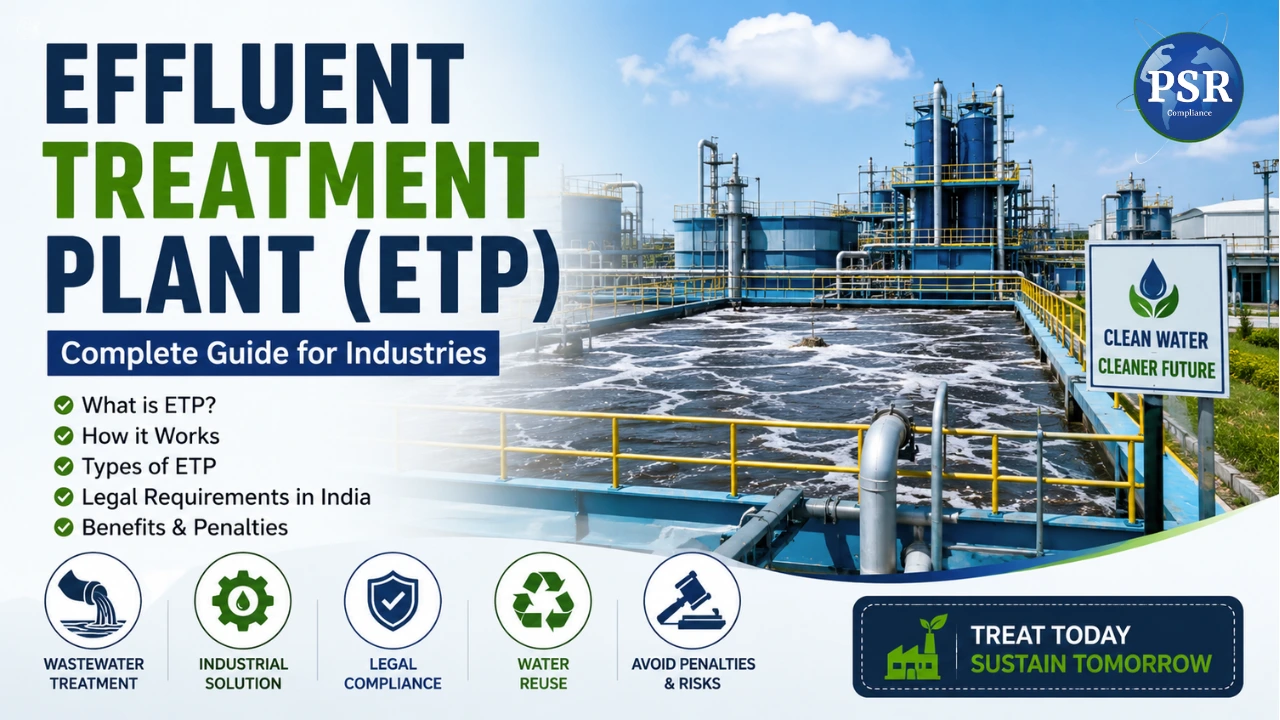
ETP
Wed, Jun 24 2026
Raju Karn
ETP Full Form & Effluent Treatment Plant: The Complete 2026 Guide
Every factory, mill, or manufacturing unit produces wastewater as a byproduct of its operations. This wastewater called effluent — is loaded with chemicals, dyes, heavy metals, oils, or organic waste depending on the industry. If released directly into rivers, lakes, or land, it poisons water sources, harms ecosystems, and affects communities living nearby. This is where an Effluent Treatment Plant (ETP) comes in. An ETP is a system that cleans industrial wastewater before it is discharged or reused. It is not optional — it is a legal requirement for most industries in India and across the world.
In this guide, you will learn exactly what an ETP is, who needs it, how it works, what it costs, and what happens if you don't have one.
What is ETP (Effluent Treatment Plant)?
ETP full form is Effluent Treatment Plant.
An Effluent Treatment Plant is a facility or system set up inside or near an industrial unit to treat the wastewater generated during manufacturing. The goal is to remove harmful pollutants from the water so that it is safe to discharge into a river, drain, or public sewer — or clean enough to reuse within the factory itself.The word "effluent" simply means liquid waste that flows out of a factory or industrial process. Simple example: A textile dyeing unit uses large amounts of water to colour fabric. That water comes out loaded with synthetic dyes, salts, and chemicals. Before this water can be released anywhere, it must pass through an ETP that removes those contaminants.
E T P full form in Hindi: औद्योगिक अपशिष्ट जल उपचार संयंत्र (Audyogik Apashisht Jal Upchar Sanyantra)
Key terms you will come across:
- BOD (Biochemical Oxygen Demand) — measures organic pollution in water
- COD (Chemical Oxygen Demand) — measures total chemical pollution
- TSS (Total Suspended Solids) — solid particles floating in water
- TDS (Total Dissolved Solids) — dissolved salts and minerals
- pH — measures acidity or alkalinity of the water
Who Needs an ETP?
Any industry that generates wastewater containing harmful substances is required by law to have an ETP. In India, the Central Pollution Control Board (CPCB) classifies industries into Red, Orange, Green, and White categories based on their pollution potential.
ETP is mandatory for all Red Category and most Orange Category industries.
Industries that must have an ETP include:
| Industry Type | Pollutants / Waste Generated |
|---|---|
| Textile & Dyeing Units | Dyes, chemicals, salts |
| Pharmaceutical Companies | APIs, solvents, lab chemicals |
| Food & Beverage Plants | Oils, fats, sugars, organic waste |
| Tanneries (Leather Units) | Chromium, sulphides, biological waste |
| Paper & Pulp Mills | Chlorine compounds, high COD wastewater |
| Chemical Manufacturers | Acids, alkalis, solvents |
| Electroplating & Metal Finishing Units | Heavy metals (chromium, nickel, zinc) |
| Distilleries & Breweries | Very high BOD/COD effluent |
| Sugar Mills | Molasses, biological waste |
| Fertilizer & Pesticide Plants | Ammonia, nitrogen compounds |
| Hospitals & Healthcare Facilities | Pathogens, pharmaceutical waste |
| Oil Refineries & Petrochemical Plants | Hydrocarbons, heavy metals |
| Paint & Ink Manufacturers | VOCs, heavy metals, solvents |
Requirements for an ETP
Before setting up or operating an ETP, an industry must meet the following requirements:
Legal requirements:
- Consent to Establish (CTE) from the State Pollution Control Board (SPCB) before construction
- Consent to Operate (CTO) from the SPCB before starting production
- The ETP must be functional before the factory begins operations — not after
Technical requirements:
- The ETP must be designed to handle the maximum daily volume of effluent the factory generates
- It must achieve the discharge standards set by CPCB or the State PCB — whichever is stricter
- The ETP must have online monitoring instruments to continuously measure BOD, COD, pH, TSS, and flow rate
- Industries in notified areas must install OCEMS (Online Continuous Effluent Monitoring System) linked directly to CPCB servers (mandatory from 2025)
Operational requirements:
- A trained ETP operator must be present during plant operation
- Effluent samples must be collected and tested at an approved laboratory regularly
- All records — daily logs, lab reports, chemical usage — must be maintained and submitted to the PCB
- Sludge generated from the ETP must be disposed of as per Hazardous Waste Management Rules if it qualifies as hazardous
Site requirements:
- Adequate land or space for tanks, pumps, blowers, and sludge handling
- Uninterrupted power supply or backup (since ETP cannot be shut down without risking non-compliance)
- Proper drainage and containment to prevent spillage
Advantages of an ETP
Setting up and running an ETP properly brings several real benefits beyond just legal compliance:
1. Legal protection
Operating a functional ETP keeps you protected from fines, closure orders, and criminal liability under environmental laws.
2. Water recycling and cost savings
A well-designed ETP — especially one with tertiary treatment or RO — allows the treated water to be reused inside the factory for cooling, washing, or gardening. This directly reduces freshwater purchase costs. A medium-sized food plant can save ₹8–15 lakh per month by reusing treated water.
3. Energy recovery
Industries with high organic effluent (distilleries, sugar mills, food plants) can install anaerobic digesters in their ETP to generate biogas from sludge. This biogas can be used to generate electricity or heat, reducing energy bills significantly.
4. Social and community goodwill
Industries that treat their waste responsibly face fewer protests, legal complaints, and media attention from nearby communities.
5. Export and ESG compliance
International buyers — especially in Europe and the US — now demand environmental compliance certificates before placing orders. A functioning ETP is often a prerequisite for export licences in textiles, pharma, and food sectors.
6. Access to credit and insurance
Banks and financial institutions increasingly evaluate environmental compliance as part of loan eligibility. Industries without ETPs face higher risk ratings.
7. Avoid property devaluation
Untreated effluent can contaminate groundwater and soil on and around the factory premises, reducing property value and creating long-term remediation liability.
Types of Effluent Treatment Plants (ETP)
| ETP Type | How It Works | Best For / Use Case |
|---|---|---|
| Physico-Chemical ETP | Uses physical (screening, settling) and chemical processes (coagulation, pH correction); no bacteria involved | Heavy metals, dyes, inorganic chemicals; used in electroplating, textile, chemical industries |
| Biological ETP (Aerobic) | Uses oxygen-based bacteria to break down organic waste with aeration systems | High BOD effluent like food processing, dairy, breweries |
| Biological ETP (Anaerobic) | Uses bacteria without oxygen; also generates biogas | Very high COD waste; distilleries, pulp mills, slaughterhouses |
| Combined (Multi-Stage) ETP | Mix of physico-chemical and biological processes | Complex industrial wastewater; pharma, chemical industries |
| CETP (Common ETP) | Shared treatment plant used by multiple industries | MSMEs and industrial clusters with shared costs |
| ZLD (Zero Liquid Discharge) ETP | Recovers and reuses all water; no discharge outside | Textile and high-compliance industries; zero discharge requirement |
| Mobile / Packaged ETP | Compact, pre-built system for quick setup | Temporary sites, construction, remote locations |
| MBR (Membrane Bioreactor) ETP | Combines biological treatment with membrane filtration | High-quality reuse water; pharma parks, IT campuses |
Documents Required
To obtain ETP-related approvals and operate legally, an industry needs the following documents:
For Consent to Establish (CTE):
→ Duly filled application form (Form I under Water Act or state-specific form)
→ Project report with details of manufacturing process and effluent generation
→ ETP design report prepared by a qualified environmental engineer
→ Site plan and layout drawing showing ETP location
→ Land ownership or lease documents
→ List of raw materials, products, and byproducts
→ Water balance chart showing water intake, consumption, and effluent generated
For Consent to Operate (CTO):
→ Proof of ETP installation (completion certificate from ETP vendor/engineer)
→ Recent effluent test report from a NABL-accredited laboratory (showing compliance with discharge norms)
→ ETP operation manual
→ Previous CTE approval copy
→ Updated site layout
→ Details of sludge disposal arrangements
→ OCEMS installation certificate (for Red Category industries)
For ongoing compliance:
→ Monthly/quarterly effluent monitoring reports submitted to State PCB
→ Annual environmental statement
→ Hazardous waste manifest (for industries generating hazardous sludge)
→ ETP operator's qualification certificate
Step-by-Step Process — How an ETP Works
Here is exactly how an Effluent Treatment Plant processes wastewater, stage by stage:
Step 1: Collection of Effluent
Wastewater generated from different sections of the factory—such as the production floor, washing areas, and boiler systems—is collected through a well-designed drainage network. This effluent is directed into an underground collection sump or holding tank, where it is stored before treatment begins. Proper collection ensures no untreated wastewater escapes into the environment.
Step 2: Preliminary Treatment — Removing Large Solids
At this stage, the collected effluent passes through bar screens or rotary drum screens that remove large solid particles like cloth fibres, plastics, food waste, and rags. After screening, the water enters a grit chamber where heavy particles such as sand and gravel settle at the bottom. Additionally, oil and grease are removed using an oil trap, ensuring smoother operation in later stages.
Step 3: Equalization
The pre-treated effluent is then stored in an equalization tank, which helps balance fluctuations in wastewater flow and pollutant concentration. Since industrial activities vary throughout the day, this tank ensures a steady and uniform flow of effluent is sent to the next treatment stage, improving overall efficiency.
Step 4: Primary Treatment — Settling and Chemical Treatment
In the primary clarifier, suspended solids settle down under gravity and form primary sludge. For particles that do not settle naturally, chemicals like alum or ferric chloride are added to initiate coagulation, followed by polymers for flocculation. These processes combine smaller particles into larger clumps that settle easily. In some cases, Dissolved Air Flotation (DAF) units are used to remove lighter particles.
Step 5: Secondary Treatment — Biological Treatment
The effluent still contains dissolved organic matter after primary treatment. It is treated in a biological reactor where microorganisms break down organic pollutants. Air is continuously supplied to maintain aerobic conditions. Common technologies used include Activated Sludge Process (ASP), Moving Bed Biofilm Reactor (MBBR), and Sequential Batch Reactor (SBR). This stage significantly reduces Biological Oxygen Demand (BOD) by up to 85–95%.
Step 6: Secondary Clarification
After biological treatment, the mixture of water and sludge enters a secondary clarifier. Here, the biological sludge settles at the bottom, and clean water flows out from the top. A portion of the settled sludge is recycled back into the reactor to maintain microbial activity, while excess sludge is removed for further treatment.
Step 7: Tertiary Treatment — Final Polishing (If Required)
For industries requiring higher quality discharge or water reuse, tertiary treatment is applied. This may include sand filtration to remove fine particles, activated carbon filters to eliminate colour and odour, reverse osmosis (RO) to remove dissolved salts, and UV or ozone treatment for disinfection. This stage ensures the water meets strict environmental standards.
Step 8: Discharge or Reuse
The treated water is tested according to pollution control standards set by regulatory authorities like the CPCB or State Pollution Control Boards. If compliant, the water is either safely discharged into designated water bodies or reused within the facility for applications such as cooling, flushing, or gardening.
Step 9: Sludge Treatment and Disposal
The solids collected during primary and secondary treatment are processed as sludge. This sludge is first thickened and then dewatered using equipment like filter presses or centrifuges to reduce its volume. Depending on its nature, the sludge is either sent to authorized Hazardous Waste Treatment, Storage, and Disposal Facilities (TSDF) or safely reused as compost or fertilizer if non-hazardous.
Penalties for Not Having or Operating an ETP
| Law / Authority | Penalty Type | Details |
|---|---|---|
| Water (Prevention and Control of Pollution) Act, 1974 | Imprisonment | 1.5 to 6 years for operating without consent or violating discharge norms |
| Fine | Up to ₹10,000 per day for continuous violations | |
| Closure | Industrial unit can be shut down by State PCB | |
| Environment Protection Act, 1986 | Imprisonment | Up to 5 years (first offence), up to 7 years for repeat offences |
| Fine | Up to ₹1 lakh + ₹5,000 per day for continuing violations | |
| National Green Tribunal (NGT) | Environmental Compensation | ₹5 lakh to several crores depending on damage |
| Enforcement Action | Immediate sealing of units without notice | |
| Community Compensation | Industries may be ordered to compensate affected people | |
| Central Pollution Control Board (CPCB) | Compliance Action | Closure for failure to install/connect OCEMS |
| Enforcement Data | 1,400+ units received closure notices in H1 2025 | |
| Business & Reputation Impact | Commercial Loss | Export licenses may be suspended |
| Market Impact | International buyers may cancel orders | |
| Financial Risk | Banks/NBFCs may classify as high-risk, affecting loans |
Timeline and Validity
How long does it take to set up an ETP?
| Activity | Typical Time |
|---|---|
| ETP design and engineering | 4–8 weeks |
| Equipment procurement | 6–14 weeks |
| Civil construction | 8–16 weeks |
| Equipment installation and commissioning | 4–8 weeks |
| Trial run and effluent testing | 2–4 weeks |
| Total (small to medium ETP) | 6–12 months |
| Total (large or ZLD ETP) | 12–24 months |
Validity of ETP-related consents:
| Consent Type | Validity |
|---|---|
| Consent to Establish (CTE) | 5 years (must be renewed if construction is not completed) |
| Consent to Operate (CTO) | 1–5 years depending on state and industry category |
| Hazardous Waste Authorization | 1–5 years |
Renewal: CTO must be renewed before expiry. Operating on an expired CTO is treated the same as operating without consent and attracts penalties. Most states now allow online renewal through their PCB portal.
Important note: Several states have shifted to a Combined Consent and Authorization (CCA) system where CTE, CTO, and Hazardous Waste Authorization are issued as a single document. Check with your State PCB for the current process.
Conclusion
An Effluent Treatment Plant is not just a legal checkbox — it is the foundation of responsible industrial operation. Industries that treat their wastewater seriously protect their communities, reduce long-term costs, avoid legal risk, and build credibility with buyers, investors, and regulators. The ETP landscape in India is evolving fast. Real-time monitoring (OCEMS), Zero Liquid Discharge mandates, and stricter NGT oversight mean that half-hearted compliance is increasingly hard to sustain. The industries that invest in proper ETP infrastructure today are the ones that will operate without interruption tomorrow.
Whether you are setting up a new factory, upgrading an existing ETP, or trying to understand if your unit needs one — start with your State Pollution Control Board, get a qualified environmental engineer to assess your effluent, and treat compliance as an investment rather than a cost.
Get Expert Help with Effluent Treatment Plant (ETP) Compliance
Need assistance with ETP setup, approval, or compliance? PSR Compliance offers complete end-to-end support—from design consultation and documentation to Pollution Control Board approvals and implementation—ensuring a smooth and hassle-free process.
👉 Avoid penalties, shutdown risks, and compliance issues with expert guidance.
📞 8796104190
📧 support@psrcompliance.com
FAQs
What is the full form of ETP?
ETP stands for Effluent Treatment Plant. It is used to treat industrial wastewater before discharge or reuse.
What is the difference between ETP and STP?
ETP treats industrial wastewater, while STP treats domestic sewage. ETP is more complex due to chemicals and pollutants.
Is ETP mandatory in India?
Yes, ETP is mandatory for Red Category and most Orange Category industries under the Water (Prevention and Control of Pollution) Act, 1974 and Environment Protection Act, 1986.
What is CETP?
CETP (Common Effluent Treatment Plant) is a shared facility used by multiple small industries to treat wastewater collectively.
What is ZLD in an ETP?
ZLD (Zero Liquid Discharge) means no wastewater is discharged; all water is treated and reused within the facility.
How much does an ETP cost in India?
Costs range from ₹8 lakh to ₹20 crore depending on size and type, with additional monthly operating expenses.
What happens if I don’t have an ETP?
You may face closure, fines, imprisonment, and action from the National Green Tribunal.
How long is the Consent to Operate (CTO) valid?
CTO is valid for 1 to 5 years depending on the industry and must be renewed before expiry.
What is OCEMS?
OCEMS is a real-time monitoring system that sends effluent data directly to the Central Pollution Control Board.
Do hospitals need an ETP?
Yes, hospitals must treat wastewater containing pathogens and chemicals through an ETP or similar system.