

Just send us your questions or concerns by starting a new case &
we will give you the help you need. Start Here...
RCMC
Thu, Mar 05 2026
Raju Karn
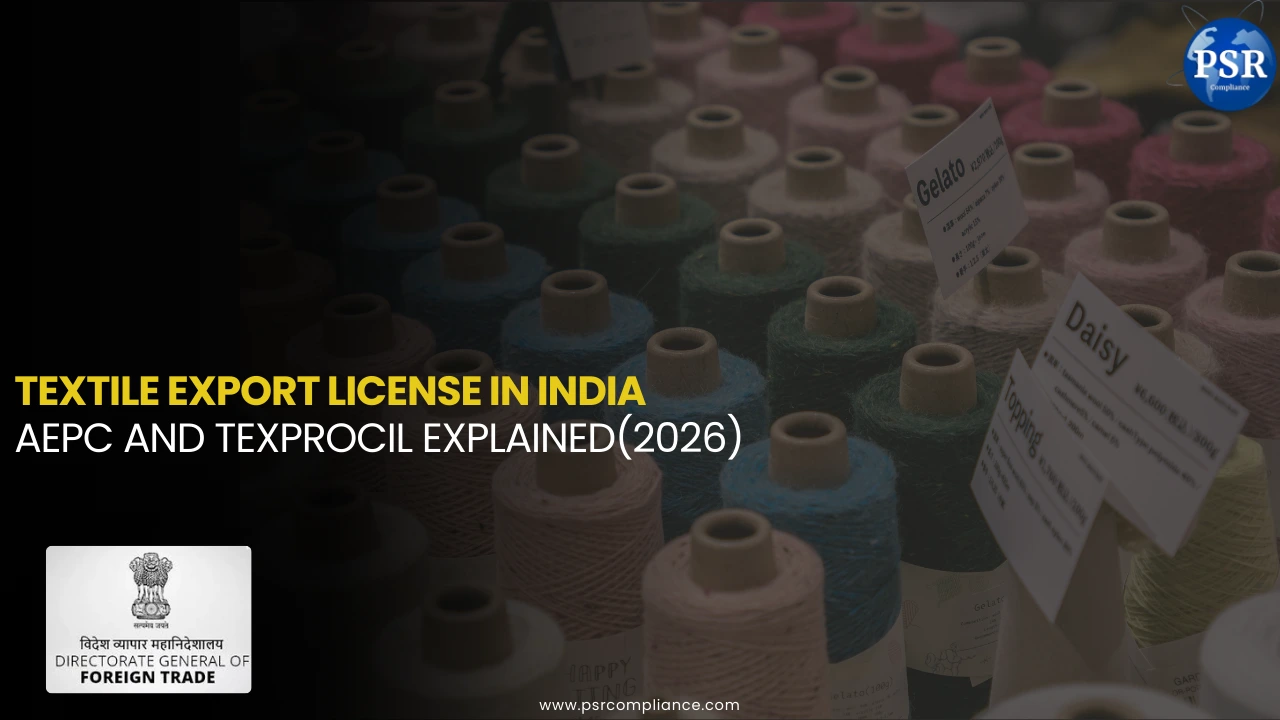
Textile Export License in India: AEPC and TEXPROCIL Explained (2026 Guide)
India is one of the largest textile exporters in the world. From cotton garments and fabrics to home textiles and yarn, Indian textile products are supplied to markets like the USA, Europe, the Middle East, and Southeast Asia. Thousands of small and medium businesses are involved in manufacturing and exporting these products every year.
However, exporting textiles from India is not just about manufacturing quality products and finding international buyers. Exporters must follow government rules, obtain the correct registrations, and work with export promotion councils that regulate and support the industry.
Two important organizations that textile exporters must understand are AEPC (Apparel Export Promotion Council) and TEXPROCIL (The Cotton Textiles Export Promotion Council). These councils operate under the Foreign Trade Policy of India and help exporters with registration, certification, market access, and government benefits.
If you are planning to start a textile export business or expand your textile manufacturing unit into international markets, understanding textile export licenses and council registrations is essential.
What is a Textile Export License in India?
In simple terms, a textile export license usually refers to registration with the appropriate Export Promotion Council (EPC) related to textile products.
The Government of India requires exporters to obtain an RCMC (Registration-Cum-Membership Certificate) from the relevant export promotion council. This certificate confirms that the exporter is registered under the Foreign Trade Policy and is eligible for export-related benefits.
For textile exporters, the two most common councils are:
- AEPC – Apparel Export Promotion Council
- TEXPROCIL – Cotton Textiles Export Promotion Council
Which council you need depends on the type of textile products you export.
What is AEPC (Apparel Export Promotion Council)?
AEPC is the government-recognized organization responsible for promoting garment and apparel exports from India.
It works under the Ministry of Commerce and Industry and supports exporters involved in clothing and ready-made garment manufacturing.
Products Covered Under AEPC
AEPC generally covers exporters dealing with:
➤ Readymade garments
➤ Fashion apparel
➤ Knitted garments
➤ Woven garments
➤ Kidswear and sportswear
➤ Fashion clothing and designer wear
In simple terms, if your business exports finished clothing products, AEPC registration is usually required.
Role of AEPC for Exporters
AEPC provides several types of support to garment exporters:
➔ Export guidance and regulatory support
➔ Participation in international garment exhibitions
➔ Market intelligence and industry reports
➔ Export promotion schemes
➔ Policy updates and trade advisory
For many garment exporters, AEPC membership also helps build credibility with global buyers.
What is TEXPROCIL?
TEXPROCIL stands for The Cotton Textiles Export Promotion Council.
It is another export promotion council recognized by the Government of India and focuses on cotton textiles and related products.
While AEPC deals mainly with garments, TEXPROCIL focuses on cotton fabrics, yarn, and other textile materials.
Products Covered Under TEXPROCIL
Exporters dealing with the following products usually register under TEXPROCIL:
● Cotton yarn
● Cotton fabrics
● Home textiles
● Bed linen and bath linen
● Cotton made-ups
● Industrial textile materials
If your company exports textile raw materials or fabric products rather than finished garments, TEXPROCIL registration is generally required.
Why Textile Exporters Need AEPC or TEXPROCIL Registration
Many new exporters think that an Import Export Code (IEC) is enough for exporting goods. While IEC is mandatory, it is not always sufficient for claiming government benefits.
Export Promotion Council registration provides several advantages.
1. Eligibility for Export Incentives
Government schemes and benefits under the Foreign Trade Policy often require an RCMC certificate issued by the relevant council.
2. Recognition as an Exporter
Registration helps establish your company as a recognized textile exporter in official trade records.
3. Market Access and Buyer Connections
Export promotion councils organize:
- Global trade fairs
- International buyer-seller meets
- Export exhibitions
These events help exporters connect with international buyers and distributors.
4. Industry Updates
Members receive regular updates about:
- Export regulations
- Trade policies
- Tariff changes
- International demand trends
5. Support for Export Documentation
Export councils also guide exporters on:
- Export procedures
- product classifications
- compliance requirements
This support becomes very useful for new exporters entering international markets.
Who Needs Textile Export Council Registration?
You may need registration with AEPC or TEXPROCIL if you are:
➔ A textile manufacturer planning to export products
➔ A merchant exporter dealing in textile goods
➔ A garment manufacturer exporting clothing
➔ A textile trader exporting cotton fabrics or yarn
➔ A company involved in international textile trade
Even startups entering the textile export business should obtain registration early to avoid compliance issues later.
Advantages of Textile Export Registration
Export promotion council membership provides multiple long-term advantages.
Government Recognition
The exporter becomes officially recognized under the Foreign Trade Policy.
Access to Export Benefits
Registered exporters can access government incentive schemes and trade benefits.
Global Market Exposure
Export councils organize international exhibitions and trade missions.
Industry Networking
Exporters get opportunities to connect with manufacturers, buyers, and suppliers worldwide.
Export Guidance
Councils provide guidance on international trade regulations and documentation.
For many exporters, these advantages help expand business beyond domestic markets.
Documents Required for Textile Export License (RCMC)
Although documentation may slightly vary depending on the council, most applications require similar documents.
Common documents include:
→ Import Export Code (IEC) certificate
→ PAN card of the business
→ GST registration certificate
→ Company incorporation documents
→ Partnership deed or MOA/AOA
→ Bank certificate or cancelled cheque
→ Business address proof
→ Authorized signatory details
→ Digital photograph of the applicant
Providing complete and correct documentation helps speed up the approval process.
Step-by-Step Process to Apply for Textile Export Council Registration
The application process is now largely online and streamlined.
Step 1: Obtain Import Export Code (IEC)
Before applying for council membership, exporters must obtain an IEC from the Directorate General of Foreign Trade (DGFT).
This is the basic license required for any export activity in India.
Step 2: Identify the Relevant Export Promotion Council
Choose the appropriate council based on your product category:
AEPC for garments and apparel
TEXPROCIL for cotton textiles and fabrics
Step 3: Submit Membership Application
Exporters must fill the online membership application form on the official website of the respective council.
Step 4: Upload Required Documents
All necessary documents such as IEC, GST certificate, and company registration documents must be uploaded during the application process.
Step 5: Pay Membership Fees
Each council has its own membership fee structure, which may depend on company type and export turnover.
Step 6: Verification and Approval
Once the application is submitted, the council reviews the documents and verifies the details.
Step 7: Issuance of RCMC Certificate
After approval, the exporter receives an RCMC certificate, which confirms registration with the council.
This certificate is used for export benefits, compliance, and government schemes.
Timeline for Textile Export Registration
The approval timeline depends on document verification and application accuracy.
In most cases:
- Application review: 5–10 working days
- Approval and certificate issuance: 7–15 working days
Providing complete documents helps avoid delays.
Real Life Example
A textile manufacturer based in Surat wanted to start exporting cotton fabrics to European buyers. The company already had buyers ready but faced difficulties with documentation and export compliance.
After consulting PSR Compliance, the company obtained:
- Import Export Code (IEC)
- TEXPROCIL membership
- Registration-Cum-Membership Certificate (RCMC)
With proper registration and documentation support, the company was able to start exporting within a few weeks and successfully shipped its first international order.
Need Help with Textile Export Registration?
Starting textile exports involves several registrations and compliance requirements. Getting professional guidance can make the process easier and faster.
PSR Compliance helps businesses with export registrations, documentation, and government approvals so you can focus on growing your international business.
📞 Call +91-7065883416 to get expert support for textile export registration and compliance.
FAQs
1. What license is required to export textiles from India?
To export textiles from India, businesses must obtain an Import Export Code (IEC) from Directorate General of Foreign Trade along with other applicable registrations.
2. What is IEC and why is it required for textile exports?
The Import Export Code (IEC) is a mandatory 10-digit identification number issued by Directorate General of Foreign Trade that allows businesses to legally import or export goods from India.
3. Is RCMC required for textile exporters in India?
Yes, textile exporters must obtain an RCMC from relevant export promotion councils like Apparel Export Promotion Council or Cotton Textiles Export Promotion Council to access export benefits.
4. Do textile exporters need GST registration in India?
Yes, GST registration is required for textile exporters, although garment exports are treated as zero-rated supplies under GST.
5. What are the steps to start a textile export business in India?
To start a textile export business, you must establish a business entity, obtain IEC from DGFT, register for GST, and apply for RCMC from the relevant export council.
6. How can I apply for an IEC for textile exports?
You can apply for the Import Export Code online through the DGFT portal by submitting required documents and paying the government fee of around ₹500.
7. Are quality certifications required for textile exports?
Yes, certain textile products may require quality certification from organizations like the Quality Council of India to meet international export standards.
8. What export incentives are available for textile exporters in India?
Textile exporters can benefit from schemes such as the Duty Drawback Scheme and other government export promotion incentives.
9. Are textile and garment exports taxed under GST?
Garment and textile exports are considered zero-rated supplies, which allows exporters to claim input tax credit refunds.
10. Do exporters need to update IEC details every year?
Yes, exporters must update their IEC details electronically every year before June 30 on the DGFT portal.
11. Are additional certificates required for exporting textiles to specific countries?
Yes, depending on the destination country, exporters may need additional documents such as a Loading Certificate or quality compliance certificates.
12. Which export promotion councils regulate textile exports in India?
Textile exporters are supported by councils such as Apparel Export Promotion Council and Cotton Textiles Export Promotion Council.