
Just send us your questions or concerns by starting a new case &
we will give you the help you need. Start Here...
GACC For Spices
Thu, Feb 05 2026
Raju Karn
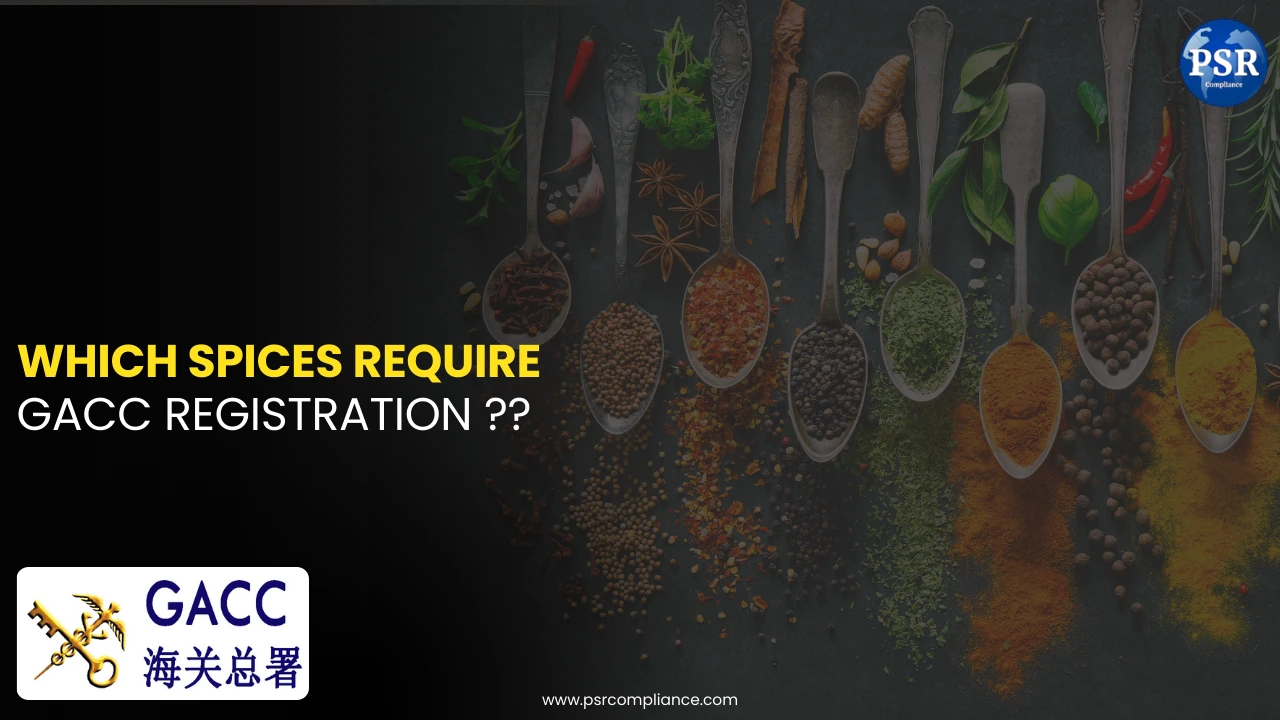
Which Spices Require GACC Registration Before Export to China (2026)
If you are exporting spices from India to China, GACC registration is something you cannot afford to overlook. Many exporters come to know about it only when a Chinese buyer asks for the certificate or when a shipment is held at the port. At that point, delays, losses, and trust issues with the buyer become hard to fix.
China has tightened its food import rules, and spices fall directly under these regulations. Registration is not required for every exporter by default, but for specific spice products meant for the Chinese market. This blog clearly explains which spices need GACC registration, so you can avoid rejections and export with confidence.
What Is GACC Registration?
GACC stands for General Administration of Customs of China. It is the Chinese authority that controls what food products can enter China and from which manufacturers.
If you are exporting spices to China, China wants to know:
- Who is manufacturing the spice
- Where it is processed
- Whether it meets Chinese safety standards
- Whether the facility is approved by Chinese authorities
This approval is called GACC registration, and once approved, the manufacturer is listed in China’s official import system (CIFER). Without this listing, your spice shipment can be rejected even if everything else is correct.
Is GACC Registration Mandatory for All Spices?
This is where most exporters get confused.
The short answer is:
👉 Yes, most edible spices require GACC registration if they are exported to China.
China treats spices as food products, not general agricultural goods. That means they fall under China’s food safety import rules, which require manufacturer-level registration.
If you are exporting spices in raw, processed, ground, dried, or blended form for human consumption, GACC registration is required.
Important Point Many Exporters Miss
GACC registration is not issued to traders or exporters.
It is issued to the manufacturer or processing unit.
So even if you are a trader:
– Your manufacturer must have GACC registration
– Your manufacturer’s name must appear on shipping documents
– Your product must match the approved category
If the manufacturer is not registered, your shipment is at risk.
List of Spices That Commonly Require GACC Registration
Below is a practical list of spices that usually require GACC registration before export to China. If you deal in any of these, you should assume GACC is required unless clearly exempted.
1. Chili and Capsicum Products
- Whole dried red chilies
- Crushed or powdered chili
- Capsicum powder
- Paprika (edible grade)
Chilies are one of the most strictly checked spice products by Chinese customs due to pesticide and aflatoxin concern
2. Turmeric
- Whole dried turmeric
- Turmeric powder
- Processed turmeric products
Turmeric is classified as a food ingredient, so GACC registration is mandatory for manufacturers exporting to China.
3. Cumin Seeds
- Whole cumin seeds
- Ground cumin powder
Cumin is widely used in Chinese food processing, which makes it a high-monitoring product.
4. Coriander
- Coriander seeds
- Coriander powder
Even though coriander looks like a basic agricultural product, China treats it as a food spice, not a raw grain.
5. Fennel Seeds
- Whole fennel
- Fennel powder
Fennel is commonly rejected when exporters assume APEDA registration alone is enough. It is not.
6. Black Pepper and White Pepper
- Whole peppercorns
- Ground pepper powder
Pepper exports to China almost always require GACC registration, especially when shipped in commercial quantities.
7. Cardamom
- Green cardamom
- Black cardamom
Due to strong aroma and food use, cardamom falls under regulated spice imports.
8. Ginger (Dried or Processed)
- Dried ginger
- Ginger powder
Fresh ginger follows a different phytosanitary route, but processed or dried ginger requires GACC registration.
9. Garlic Powder and Onion Powder
- Dehydrated garlic
- Garlic powder
- Onion powder
Powdered products attract stricter checks than whole agricultural produce.
10. Spice Blends and Masalas
- Mixed spice powders
- Curry powder
- Garam masala
- Ready spice mixes
This category is high-risk if GACC registration is missing because blends involve multiple ingredients.
What About Whole Raw Spices?
Many exporters ask:
“If I export whole spices without processing, do I still need GACC registration?”
In most cases, yes.
China looks at end use, not just form. If the product is meant for food consumption, registration is usually required. Some whole spices may additionally require:
▪ Phytosanitary certificate
▪ Export inspection
▪ Additional approvals
But GACC registration is still the base requirement.
Is APEDA Registration Enough for China?
No.
APEDA registration is required for Indian export compliance, but it does not replace GACC registration.
Think of it this way:
– APEDA = India allows you to export
– GACC China = China allows your product to enter
You need both.
What Happens If You Export Spices Without GACC Registration?
Exporters usually face one of these problems:
➔ Shipment held at Chinese port
➔ Buyer refuses to clear goods
➔ Goods returned or destroyed
➔ Blacklisting of exporter or manufacturer
➔ Heavy financial loss
The worst part?
Chinese customs does not accept “lack of awareness” as an excuse.
Who Should Apply for GACC Registration?
GACC registration must be applied by:
● The spice manufacturer
● The processing unit
● The grinding or blending facility
Traders and exporters can coordinate, but the registration is issued in the manufacturer’s name.
Why Exporters Delay GACC Registration
Most exporters delay because:
➤ Buyer didn’t ask initially
➤ Previous shipments went through
➤ They assumed APEDA was enough
➤ They didn’t know which spices were covered
But rules are strictly enforced now, especially after 2023–2024 updates.
In 2026, exporting without GACC registration is a high-risk gamble.
Need help with GACC registration?
Contact PSR Compliance at 📞 8796104190 for quick, clear support before you export.
FAQs on GACC Registration for Spices
1. Is GACC registration mandatory for exporting spices to China?
Yes, GACC registration is mandatory for all spice manufacturers exporting to China under Decree 248.
2. Can a spice trader apply for GACC registration without a manufacturing unit?
No, only the actual spice manufacturer or processor is eligible for GACC registration.
3. What is the difference between GACC registration and AQSIQ registration?
AQSIQ was the old system, and exporters must now register or update details in the GACC CIFER system.
4. How long does GACC registration approval take for spices?
GACC approval for spices usually takes 20 to 60 working days.
5. What happens if spices are shipped without GACC registration?
Unregistered spice shipments may be rejected, detained, or destroyed at Chinese ports.
6. What is the validity period of GACC registration for spices?
GACC registration is valid for five years and must be renewed before expiry.
7. Are spices considered high-risk products under GACC registration?
Yes, many spices, especially crushed or ground plant-based seasonings, fall under high-risk categories.
8. Who recommends high-risk spice products for GACC registration?
High-risk spice products must be recommended by the local competent authority, such as the Spices Board of India.
9. What are the common reasons for GACC registration rejection?
Common reasons include incomplete documents, wrong HS codes, and incorrect or missing packaging labels.
10. Where can I apply for GACC registration for spices?
GACC registration applications are submitted online through the CIFER system on China’s single-window platform.
11. Is it mandatory to print the GACC registration number on spice packaging?
Yes, the GACC registration number must be printed on the outer and sometimes inner packaging as per Decree 248.