
Just send us your questions or concerns by starting a new case &
we will give you the help you need. Start Here...
GACC Registration
Tue, Jan 13 2026
Raju Karn
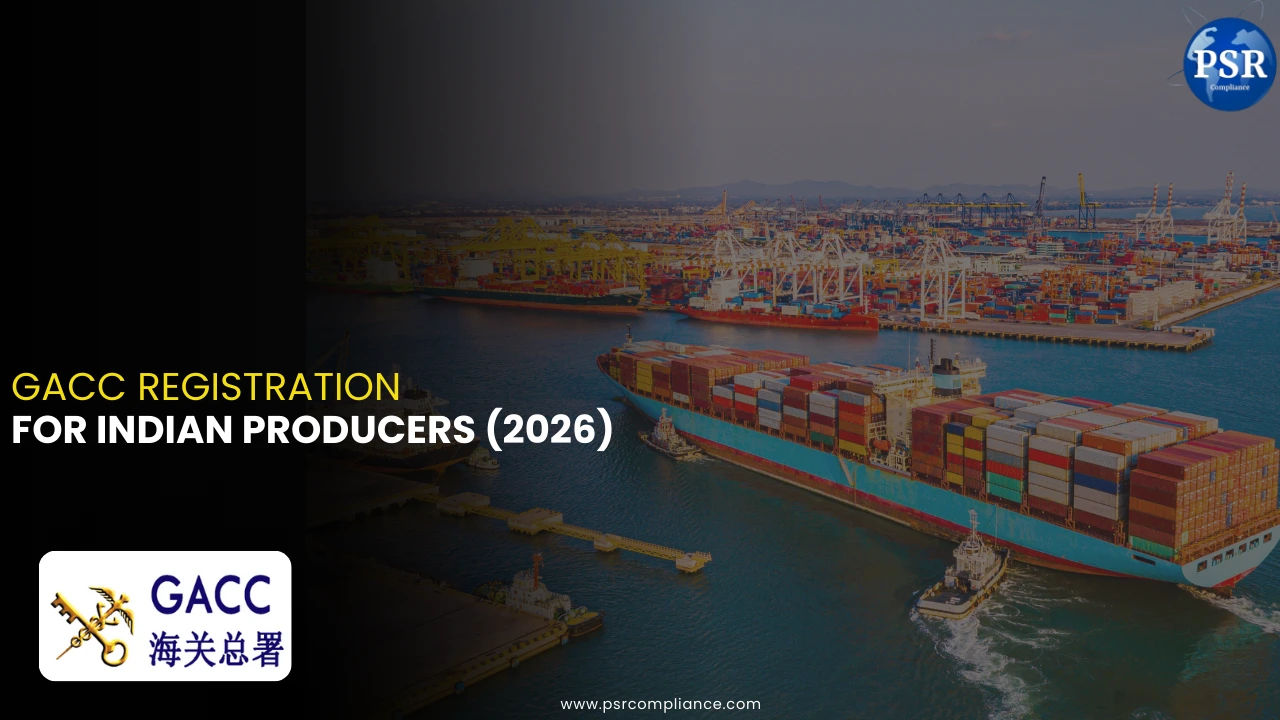
GACC Registration for Indian Producers: Step By Step Guide(2026)
If you are an Indian manufacturer or exporter planning to sell goods to China, GACC Registration is no longer optional, it is mandatory. Chinese customs now require overseas producers, especially in food, agricultural products, processed goods, cosmetics, and select industrial categories, to be registered under the General Administration of Customs of China (GACC), and the rules just changed. As of 1 June 2026, a new regulation, GACC Decree No. 280, has replaced the earlier framework, updating which product categories require official government recommendation versus self-registration, and introducing tighter scrutiny for a newly defined list of "high-risk" food categories.
Many exporters search for "GACC Registration," "GACC Certification," or "what is GACC" because without this approval, shipments can be delayed, rejected at Chinese ports, or permanently blocked, and there's no government fee for registration itself, so the real cost is in getting the documentation and process right. This guide explains who needs GACC registration under the current rules, required documents, step-by-step process, timelines, and how PSR Compliance helps Indian producers get approved smoothly.
What is GACC?
GACC stands for General Administration of Customs of the People’s Republic of China. It is the authority that regulates imports into China, including customs clearance, product safety, food compliance, and overseas manufacturer registrations.
In simple words:
👉 If your product enters China, GACC decides whether it is allowed or not.
What is GACC Registration?
GACC Registration is the official listing of a foreign (non-Chinese) manufacturer, processor, or producer in the Chinese customs system. Once approved, your company is issued a GACC Registration Number, which must appear on product labels, shipping documents, and customs filings.
Without this registration:
- Shipments can be held at port
- Products may be returned or destroyed
- Importers may refuse to deal with unregistered suppliers
Who Needs GACC Registration?
GACC registration is required for overseas manufacturers and processors exporting certain product categories to China.
You must apply if you are:
➤ A food manufacturer or processor
➤ An agricultural or animal product producer
➤ A packaged food exporter
➤ A meat, seafood, dairy, spices, or health food manufacturer
➤ A cosmetics, herbal, or nutraceutical exporter (as applicable)
➤ A producer in regulated industrial categories
You may not need it if:
- You are only a trader with no manufacturing activity (but your manufacturer must be registered)
- Your product falls under a category exempted by China customs
Why GACC Registration is Important for Indian Exporters
GACC registration is not just a formality- it is market access approval.
Key benefits:
● Legal entry into China without customs rejection
● Faster clearance at Chinese ports
● Increased buyer trust among Chinese importers
● Brand credibility in one of the world’s largest markets
● Avoidance of penalties, delays, and shipment losses
China has tightened import controls under its food safety and product traceability laws. This makes GACC Registration for Indian producers a critical compliance requirement.
State-wise Overview for GACC Registration in India (For Indian Producers)
GACC Registration is required for Indian food producers who want to export their products to China. The registration itself is done centrally through the Chinese authority, but in India, your preparation and approvals depend on your state-based food safety system (mainly FSSAI compliance and local inspections).
Here is a simple state-wise table to explain how it works:
| State | Key Food Industry Presence | Role in GACC Registration |
|---|---|---|
| Maharashtra | Processed food, seafood, spices | Strong export base, requires proper FSSAI and export compliance |
| Gujarat | Dairy, spices, packaged food | High number of exporters, documentation accuracy important |
| Tamil Nadu | Seafood, poultry, processed food | Major exporter to China, strict hygiene and inspection needed |
| Andhra Pradesh | Marine products, rice | GACC commonly required for seafood exporters |
| Uttar Pradesh | Dairy, packaged food, grains | Growing export sector, needs proper licensing and records |
| Punjab | Dairy, grains, food processing | Focus on quality certification and traceability |
| Karnataka | Coffee, spices, processed food | Export-oriented businesses with compliance focus |
| West Bengal | Seafood, tea, packaged food | Strong seafood export industry |
| Kerala | Spices, seafood, coconut products | High export demand, strict quality checks |
| Rajasthan | Spices, grains, processed food | Export growth with compliance requirements |
Documents Required for GACC Registration
The exact documents vary by product category, but most applications require:
Company & Legal Documents:
→ Certificate of Incorporation / Business Registration
→ Factory license or manufacturing registration
→ GST Registration Certificate
Product & Compliance Documents:
→ Product list with HS codes
→ Manufacturing process flow chart
→ Quality control procedures
→ Hazard analysis / safety management documents (for food items)
→ Product labels and packaging details
→ Test reports (if applicable)
Facility Information:
→ Factory address and layout
→ Production capacity
→ Storage and hygiene control details
GACC Registration Process – Step by Step
The GACC process is digital but highly technical. One small mistake can lead to rejection or long delays.
Step 1: Product & Eligibility Assessment
First, your product category and HS code are reviewed to confirm:
- Whether GACC registration is mandatory
- Whether self-registration or authority nomination is required
Step 2: Create GACC Online Account
Your company is registered on the GACC overseas manufacturer portal with:
- Legal company details
- Factory information
- Product category selection
Step 3: Upload Documents
All required documents are uploaded in the prescribed format:
- Manufacturing process
- Quality management systems
- Product safety controls
- Labels and packaging
Step 4: Review by Chinese Authorities
GACC reviews the application. Depending on the category, they may:
- Approve directly
- Ask for clarifications
- Conduct additional checks or verifications
Step 5: Issuance of GACC Registration Number
Once approved, your company receives a GACC Registration Number, which must be:
- Printed on product labels
- Shared with Chinese importers
- Used for customs clearance
GACC Registration Timeline & Validity
Processing Time:
20–45 working days (subject to product category and document quality)
Validity:
Generally 5 years, unless otherwise specified
Renewal must be done before expiry to avoid de-listing
Common Reasons for GACC Rejection
Many Indian exporters face rejection due to small but critical errors:
▸Incorrect HS code selection
▸Incomplete manufacturing process details
▸Poorly formatted labels
▸Missing quality control documentation
▸Mismatch between factory license and application data
Real-Life Example
Case: Mr. Sandeep Sharma –Noida , Uttar Pradesh
Mr. Sandeep Sharma, owner of a packaged spice manufacturing unit in Noida , planned to export his products to a Chinese importer in Guangzhou. Despite having IEC, GST, and all Indian certifications, his first shipment was held at the Chinese port due to missing GACC Registration.
He approached PSR Compliance, where our team:
- Verified product HS codes
- Prepared manufacturing flow and safety documentation
- Completed GACC online registration
- Corrected label formats as per Chinese requirements
Within 28 working days, his company received the GACC Registration Number. His shipment was cleared, and he now exports regularly to China without compliance risk.
How PSR Compliance Helps with GACC Registration
We do more than just fill forms. We manage your entire compliance journey.
Our support includes:
➞ Eligibility & HS code analysis
➞ Document preparation and formatting
➞ End-to-end GACC portal filing
➞ Error handling & resubmission
➞ Coordination with Chinese importers (if required)
➞ Renewal and future compliance guidance
With PSR Compliance, you get:
✔ Faster approvals
✔ Zero documentation errors
✔ Reduced risk of rejection
✔ Reliable export compliance support
Frequently Asked Questions (FAQs)
What is GACC full form?
GACC stands for General Administration of Customs of the People’s Republic of China. It is the official government authority responsible for regulating and controlling all imports and exports in China. Any foreign company exporting regulated goods to China must comply with GACC rules and obtain registration where required.
Is GACC registration mandatory for Indian exporters?
Yes, GACC registration is mandatory for Indian exporters if they are dealing in regulated product categories. Without this approval, goods may not be allowed entry into China. It is especially important for exporters of food, agricultural, and other controlled products.
Is GACC registration the same as GACC certification?
GACC registration is often called “certification” in common language, but technically it is a registration process under Chinese customs law. Once approved, the company receives a registration number that allows it to legally export eligible products to China.
Who must apply for GACC registration?
GACC registration must be done by overseas manufacturers and processors, not just traders or exporters. This means the actual production or processing facility must be registered, as Chinese authorities want to ensure product safety at the source level.
How long does GACC registration take?
The process usually takes around 20 to 45 working days, depending on document accuracy and product category. If Chinese authorities raise queries or request additional information, the timeline may extend further.
What happens if I export without GACC registration?
If a product requires GACC registration and is exported without it, the shipment can be delayed, rejected, or even destroyed at Chinese customs. In some cases, the exporter may also face penalties or restrictions on future shipments.
Is GACC registration required for food exports?
Yes, GACC registration is required for most food and agricultural products exported to China. This includes items like processed foods, seafood, dairy products, grains, spices, and other consumable goods that fall under regulated categories.
How long is GACC registration valid?
Once approved, GACC registration is generally valid for up to 5 years. After this period, companies must apply for renewal to continue exporting without interruption.
Can PSR Compliance handle the complete process?
Yes, PSR Compliance can manage the entire GACC registration process end-to-end. This includes eligibility check, document preparation, application filing on the CIFER portal, query handling, and final approval support.
Do I need to renew GACC registration?
Yes, renewal is required before the expiry of the registration. If not renewed on time, the registration may become inactive, and exporters may face disruptions or restrictions in shipping goods to China.