Thu, Mar 12 2026
Raju Karn
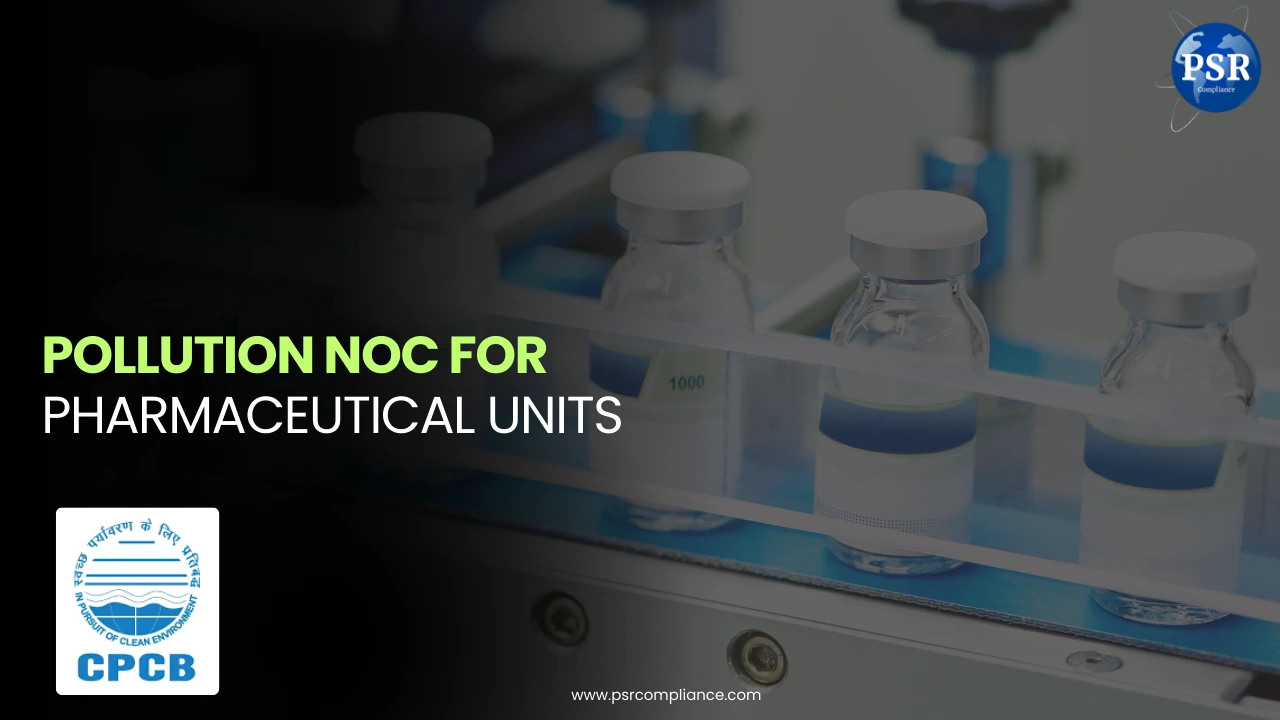
Pollution NOC for Pharmaceutical Units in India (2026)
Starting a pharmaceutical manufacturing plant in India requires several approvals, and one of the most important is the Pollution NOC. This certificate is issued by the Central Pollution Control Board or the State Pollution Control Board. Many new pharma businesses focus on land, factory construction, machinery, and drug licenses but often overlook this environmental clearance, which can cause delays later when authorities check for pollution consent.
The Pollution NOC ensures that the manufacturing unit has proper systems to control pollution and safely manage chemical waste, solvents, and wastewater produced during drug production. Understanding this approval early helps save time and avoid complications. This guide explains how Pollution NOC works, the documents required, and the step-by-step process for pharmaceutical units in 2026.
What Exactly Is a Pollution NOC?
A Pollution NOC is an official permission that lets a factory or industrial unit operate while ensuring it does not harm the environment. In simple terms, it is a certificate showing that the business takes care of its waste and pollution properly.
In India, pollution control authorities check whether the factory has systems in place for wastewater treatment, controlling air emissions, safely disposing of chemical waste, and other environmental safety measures. This is especially important for pharmaceutical industries because medicine production often produces chemical effluents and hazardous waste. Only after confirming that all these pollution control measures are in place does the authority issue the Pollution NOC.
Two Pollution Approvals Required for Pharmaceutical Units
Pharmaceutical manufacturing units usually need two different pollution permissions.
1. Consent to Establish (CTE)
This approval must be obtained before building the factory or installing machinery. Authorities check the proposed project to ensure that the plant location is suitable, pollution control equipment is planned, and waste management systems are properly designed. Without CTE, construction of the manufacturing facility should not start.
2. Consent to Operate (CTO)
Once the factory is built and machinery is installed, the company must get Consent to Operate. At this stage, authorities verify that pollution control systems are installed and functioning properly. Only after receiving CTO can the pharmaceutical unit legally begin production.
Why Pollution Approval Is Strict for Pharma Industries
Pharmaceutical manufacturing involves handling various chemicals and substances that can affect the environment if not managed carefully. Because of this, pollution authorities apply strict rules to ensure safety.
Some of the main concerns include:
➜ Chemical solvents used in production
➜ Process wastewater generated during manufacturing
➜ Toxic residues from chemical reactions
➜ Air emissions from production units
The purpose of these strict approvals is to make sure that pharma factories operate safely without harming nearby communities, water sources, or natural resources while supporting industrial growth.
Documents Typically Required for Pollution NOC
Although requirements may vary slightly by state, most pharmaceutical companies need to submit the following documents.
Business Details
→ Company registration certificate
→ PAN card
Land and Factory Information
→ Land ownership or lease documents
→ Factory layout plan
→ Site location map
Manufacturing Information
→ Manufacturing process details
→ List of machinery and equipment
→ Raw materials and finished products
Environmental Control Plan
→ Effluent Treatment Plant (ETP) design
→ Air pollution control equipment details
→ Waste disposal method
Providing accurate technical information helps the authority assess whether the project meets environmental standards.

Timeline, Validity, and Renewal of Pollution NOC for Pharmaceutical Units
| Pollution NOC Type | Timeline for Approval | Validity | Renewal Process |
|---|---|---|---|
| Consent to Establish (CTE) | 30 to 60 days | Valid until project completion or construction finished | Usually does not require renewal; ensure project complies with approved plan |
| Consent to Operate (CTO) | 30 to 45 days | 5 to 10 years (depends on state and pollution category) | 1. Submit online renewal application 2. Provide updated environmental compliance records 3. Pay applicable government fee Renewal should be done before expiry to avoid operational delays |
Common Issues Businesses Face During Approval
Many companies face delays due to avoidable mistakes.
For example:
⚠ Applying after construction has already started
⚠ Submitting incomplete technical documents
⚠ Weak waste treatment planning
⚠ Incorrect industry classification
⚠ These issues can slow down the approval process.
Planning the application properly from the beginning usually avoids these problems.
Maintaining Compliance After Approval
Getting pollution clearance is not the final step. Pharmaceutical companies must continue to follow environmental guidelines.
Some important practices include:
☑ Maintaining wastewater treatment systems
☑ Monitoring emissions regularly
☑ Keeping waste disposal records
☑ Renewing pollution consent before expiry
Following these practices ensures that the manufacturing unit remains compliant with environmental regulations.
Need Help with Pollution NOC for Your Pharma Unit?
Getting pollution approval for pharmaceutical manufacturing can sometimes be confusing, especially for new businesses. The team at PSR Compliance assists companies with documentation, application filing, and regulatory guidance for environmental compliance.
📞 For assistance, contact PSR Compliance at 8796104190 and get support in obtaining Pollution NOC smoothly for your pharmaceutical unit.
Frequently Asked Questions (FAQs)
What is a Pollution NOC for pharmaceutical units?
A Pollution NOC is an environmental approval issued by the State Pollution Control Board confirming that a pharmaceutical unit complies with pollution control laws before starting or operating a facility.
Why is Pollution NOC mandatory for pharma industries?
Pollution NOC is mandatory because pharmaceutical manufacturing generates hazardous waste, effluents, and emissions that must comply with environmental regulations.
What are CTE and CTO in Pollution NOC?
Consent to Establish (CTE) is required before setting up the unit, while Consent to Operate (CTO) is required before starting production.
Which category do pharmaceutical industries fall under?
Most pharmaceutical manufacturing units fall under the Red Category due to their high pollution potential.
Which environmental laws regulate Pollution NOC in India?
Pollution NOC is governed by the Water (Prevention and Control of Pollution) Act, 1974, the Air (Prevention and Control of Pollution) Act, 1981, and the Environment (Protection) Act, 1986.
What documents are required for Pollution NOC for pharma units?
Common documents include PAN/Aadhaar of the authorized person, site layout plan, manufacturing process flow diagram, pollution control equipment details, and hazardous waste management plan.
Is Pollution NOC required before constructing a pharmaceutical unit?
Yes, pharmaceutical units must obtain Consent to Establish (CTE) before construction or installation of machinery begins.