Thu, Jan 22 2026
Raju Karn
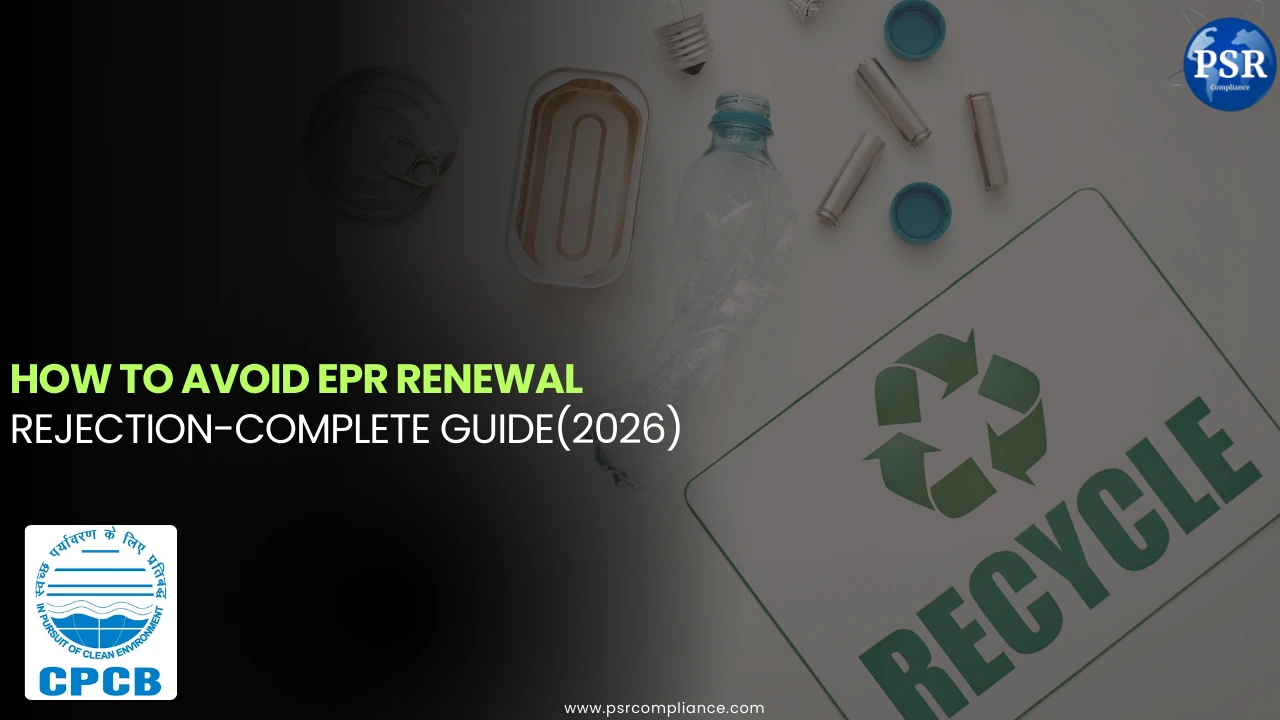
How to Avoid EPR Renewal Rejection-2026 Guide
Many businesses apply for EPR renewal thinking it is just a formality. But in reality, a large number of applications get rejected, delayed, or sent back for clarification, often because they're filed too close to the deadline. CPCB rules require renewal applications to be submitted at least 120 days before the certificate's expiry, and missing that window alone can trigger penalties, suspension of the EPR certificate, and business disruption.
If you already hold an EPR certificate and want a smooth renewal, understanding the common mistakes, from data mismatches to incomplete annual returns, is the most important step.
This guide explains why EPR renewals get rejected and how you can avoid it easily, without stress or last-minute panic.
Why Do EPR Renewal Applications Get Rejected?
EPR renewal rejection usually does not happen because of one big mistake. It happens due to multiple small gaps that CPCB or SPCB officers notice during verification.
Some common reasons include:
➜ Mismatch in data
➜ Incomplete documents
➜ Non-fulfillment of EPR targets
➜ Late filing
➜ Incorrect recycler or PRO details
Missing the EPR Renewal Timeline
This is the most common mistake.
- EPR renewal is not something you apply for after expiry. As per CPCB rules:
- EPR renewal must be filed at least 120 days before expiry
Late applications attract penalties or rejection
How to avoid rejection
- Track your EPR certificate expiry date
- Start renewal preparation 4–5 months in advance
- Do not wait for the last month
- A delayed application already puts your file under risk.
Incomplete or Incorrect Annual Return Filing
Many PIBOs apply for EPR renewal without properly filing annual returns.
CPCB checks:
- Whether returns are filed for all applicable years
- Whether sales/import data matches previous declarations
- Whether waste generation figures are realistic
Common issues
⁃ Zero or unrealistic waste numbers
⁃ Missing return for one financial year
⁃ Data mismatch with GST or import records
How to avoid rejection
‣ File all pending annual returns before renewal
‣ Cross-check figures with GST and import data
‣ Maintain consistency across all submissions
Not Achieving EPR Targets
EPR renewal is directly linked to target compliance.
If your EPR targets are:
▪ Not fulfilled
▪ Partially fulfilled
▪ Fulfilled but not properly documented
Your renewal can be kept on hold or rejected.
How to avoid rejection
⁃ Check year-wise EPR targets
⁃ Ensure recycling is done through CPCB-authorized recyclers
⁃ Upload valid EPR certificates or recycler invoices
⁃ Avoid last-minute bulk credit purchases without proper trail
Using Non-Authorized Recyclers or PROs
This is a serious compliance issue.
CPCB verifies:
- Whether recycler/PRO is registered on CPCB portal
- Validity of agreement during the compliance period
- Waste category matching (plastic, e-waste, battery, etc.)
How to avoid rejection
⁃ Use only CPCB-approved recyclers or PROs
⁃ Ensure agreements are valid for the renewal year
⁃ Match recycler category with your waste type
⁃ Even one wrong recycler entry can block your renewal.
Data Mismatch on the CPCB EPR Portal
Many renewals fail due to portal-level inconsistencies, such as:
- Company name mismatch
- Incorrect PAN/GST
- Wrong category selection
- Old address or director details
How to avoid rejection
⁃ Update company profile before renewal
⁃ Match legal documents with portal data
⁃ Re-check PIBO category carefully
⁃ Small clerical errors can trigger long delays.
Missing State-Specific Requirements
If your operations involve states like Delhi NCR, Telangana, Maharashtra, or others, CPCB may also check SPCB compliance.
For example:
● State pollution board registration
● Tie-up with local waste processors
How to avoid rejection
⁃ Keep SPCB approvals updated
⁃ Upload relevant state documents where required
⁃ Ensure consistency between CPCB and SPCB data
Poor Document Quality or Wrong Uploads
Many applications are rejected simply because:
▪ Documents are unreadable
▪ Wrong file uploaded
▪ Old or expired certificates attached
How to avoid rejection
⁃ Upload clear, signed, and updated documents
⁃ Follow correct file naming
⁃ Avoid duplicate or irrelevant uploads
⁃ Remember, CPCB officers rely entirely on uploaded documents.
Documents Required for Smooth EPR Renewal
Having documents ready in advance avoids last-minute mistakes.
Basic documents include:
→ Existing EPR certificate
→ Annual return filings
→ Sales/import data (year-wise)
→ Recycler / PRO agreements
→ EPR target fulfillment proof
→ GST, PAN, CIN details
→ Consent to Operate (if applicable)
→ Keeping these organized makes renewal smooth and fast.
Benefits of Avoiding EPR Renewal Rejection
➤ Handling renewal properly gives you:
➤ No penalties or environmental compensation
➤ Uninterrupted business operations
➤ Clean compliance history on CPCB portal
➤ Faster future approvals
➤ Better credibility with regulators and partners
➤ Most importantly, you stay stress-free and legally safe.
Get Your EPR Renewal Right – Without Rejection or Delay
If EPR rules, portals, and targets feel confusing, you don’t have to handle it alone.
PSR Compliance helps businesses:
☑ Review EPR compliance before renewal
☑ Correct portal errors and data mismatch
☑ Calculate and fulfill EPR targets properly
☑ Coordinate with authorized recyclers
☑ File EPR renewal smoothly on CPCB portal
📞 Call PSR Compliance at 8796104190
Frequently Asked Questions (FAQs) – EPR Renewal
When should I apply for EPR renewal?
You should apply 60–90 days before expiry of your EPR certificate to avoid compliance and operational issues.
What documents are required for EPR renewal?
Key documents include the existing EPR certificate, updated sales/import data, target fulfillment proof, and a valid Consent to Operate (CTO).
What happens if EPR renewal is not filed on time?
Late renewal can result in license suspension, penalties, and CPCB portal blockage, affecting business operations.
Are there fees for EPR renewal?
Yes, the renewal fee is generally the same as the initial EPR registration fee.
Can I operate while my EPR renewal application is pending?
Yes, provided the renewal is filed before expiry; otherwise, the business may be treated as non-compliant.
Is filing annual returns mandatory before EPR renewal?
Yes, all annual returns must be updated on the CPCB portal before the renewal application is processed.