Mon, Feb 09 2026
Raju Karn
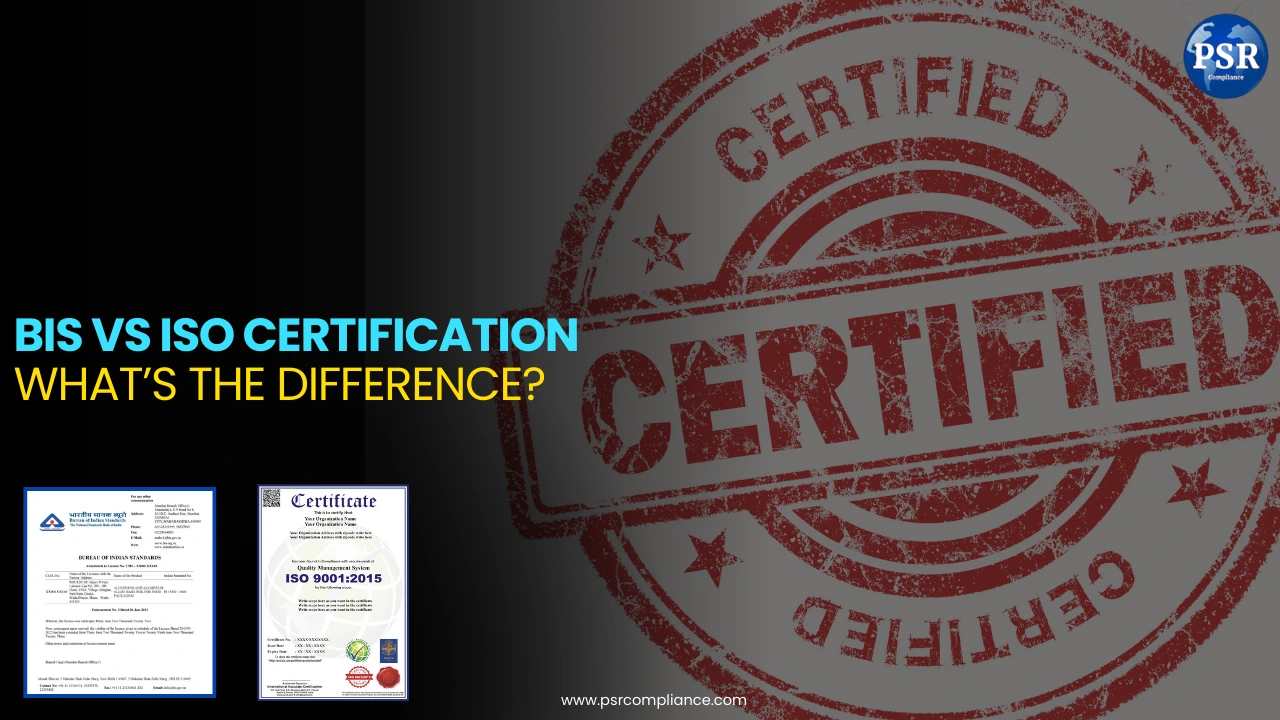
BIS vs ISO Certification: What's the Difference and Which Do You Need?
If you manufacture, import, or sell products in India, you’ve probably heard people talk about BIS certification and ISO certification as if they are the same thing. They are not. Many businesses get confused, spend money in the wrong place, or assume one certificate can replace the other. That mistake often leads to legal trouble or rejected products.
Let’s clear this confusion properly, in simple words, so you know what BIS and ISO actually mean, how they are different, and which one your business really needs.
What is BIS Certification?
BIS stands for Bureau of Indian Standards. It is the national standards authority of India, operating under the Government of India.
A BIS certificate is a legal requirement for many products sold in the Indian market. It confirms that a product meets Indian safety, quality, and performance standards.
If your product falls under mandatory BIS certification and you sell it without approval, it is considered illegal.
Common products that require BIS certification
- Electronics and IT products
- Electrical appliances
- Steel products
- Cement
- Medical devices (select categories)
- Toys and children’s products
In short, BIS certification is about product safety for Indian consumers.
What is ISO Certification?
ISO stands for International Organization for Standardization. It is an international, non-governmental body that sets global standards.
ISO certification does not approve products. Instead, it checks how a company works—its processes, systems, and management practices.
ISO is voluntary, not a legal requirement.
Common ISO certifications
➔ ISO 9001 – Quality Management System
➔ ISO 14001 – Environmental Management
➔ ISO 45001 – Occupational Health & Safety
➔ ISO 22000 – Food Safety Management
ISO certification tells customers that your business follows structured and reliable processes, but it does not guarantee product approval in India.
BIS vs ISO: The Real Difference
| Point | BIS Certification | ISO Certification |
|---|---|---|
| Full Form | Bureau of Indian Standards | International Organization for Standardization |
| Nature | Mandatory (for listed products) | Voluntary |
| Authority | Government of India | International private body |
| Focus | Product quality & safety | Business processes & management |
| Legal Requirement | Yes | No |
| Market | India | Global |
| Can one replace the other? | No | No |
Is ISO Enough If I Have BIS?
No.
This is one of the biggest misunderstandings. Many businesses believe that ISO certification can replace a BIS certificate. It cannot.
Even if your factory is ISO-certified, you still need a BIS certificate if your product is listed under mandatory BIS rules.
ISO helps in brand trust.
BIS is required for legal sale in India.
Is BIS Enough Without ISO?
Yes, legally.
If your product has a valid India BIS certificate, you can sell it in the Indian market even without ISO certification.
However, many companies still choose ISO certification because:
It improves internal systems
Builds customer confidence
Helps in exports and tenders
ISO adds value, but BIS adds legality.
Which One Do You Actually Need?
You need to ask one simple question:
👉 Am I selling a product regulated by the Indian government?
- If yes → BIS certification is mandatory
- If no, but you want better systems and credibility → ISO is helpful
If you want both compliance and brand trust → BIS + ISO is ideal
There is no “one-size-fits-all” answer. The requirement depends on your product, market, and business goal.
Why BIS and ISO Are Often Confused
People confuse BIS and ISO because:
➤ Both use the word “standards”
➤ Both involve audits and documentation
➤ Consultants often market them together
But in reality, they serve very different purposes.
Understanding this difference early can save you:
▪ Money
▪ Time
▪ Legal notices
▪ Product bans
Confused between BIS and ISO certification?
PSR Compliance helps you understand what your business actually needs and guides you through the right approval process without confusion or delays. Call 8796104190 for clear, honest compliance support you can rely on.
FAQs on BIS Certification vs ISO Certification
Is BIS mandatory?
Yes, BIS certification is mandatory for many products like electronics, cement, and household goods in India.
Do I need ISO if I already have BIS?
Yes, BIS ensures product safety, while ISO focuses on organizational processes; many companies opt for both.
Can ISO replace BIS?
No, ISO cannot replace mandatory BIS certification for regulated products in India.
What is the difference between BIS and ISI?
BIS is the governing body, and ISI is the mark that shows a product meets BIS standards.
What are the main BIS schemes?
CRS (Compulsory Registration Scheme) for electronics and IT, and ISI Mark Scheme for safety-critical products like LPG cylinders and steel.
When should I use BIS vs ISO?
Use BIS for Indian regulatory compliance and consumer trust; use ISO for global credibility and process efficiency.