Wed, Dec 24 2025
Raju Karn
Non-Basmati Rice Export from India: Step by step guide (2026)
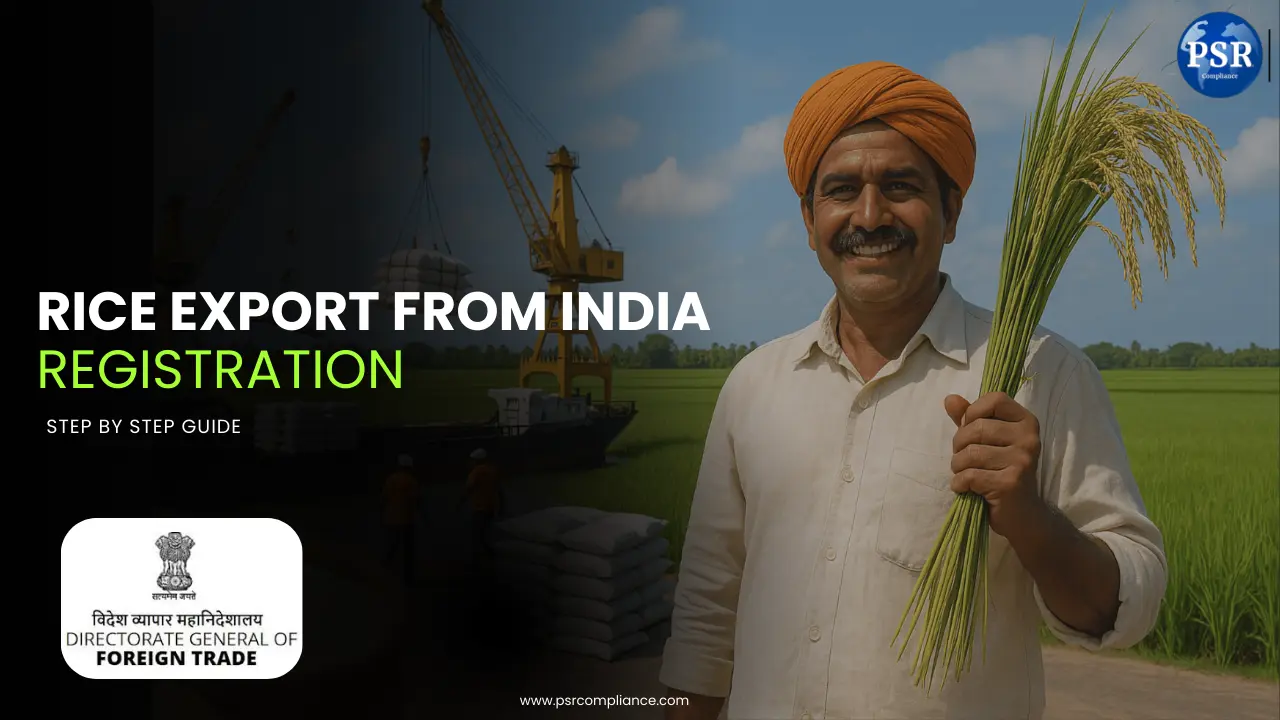
India has always been one of the biggest rice exporters in the world. In recent years, the export of non-basmati rice has become very important and also a bit complicated because the government keeps changing rules, export duties, and restrictions from time to time. Because of these frequent changes, many exporters find it difficult to stay updated and follow the correct process.
If you are already an exporter or planning to start a rice export business in India, it is very important to understand the latest rules for non-basmati rice. If you do not follow the updated policies, you may face problems like shipment delays, extra charges, penalties, or even financial loss. This blog will help you understand the current situation of non-basmati rice export in a very simple way, including the rules, process, duties, and practical steps to follow.
Overview of Rice Export from India
India dominates the global rice trade due to:
- Large production capacity
- Competitive pricing
- Strong demand from Africa, the Middle East, and Southeast Asia
The rice export of India broadly includes:
- Basmati rice export
- Non-basmati rice export (white rice, broken rice, parboiled rice, etc.)
Among these, non-basmati rice export in India is more policy-sensitive as it directly affects domestic food security and inflation.
Current Non-Basmati Rice Export Policy (2026)
The Government of India regulates non-basmati rice exports under the Foreign Trade Policy (FTP) and periodic DGFT notifications.
Key Highlights:
- Export may be free, restricted, or prohibited depending on the variety
- Minimum Export Price (MEP) may be imposed
- Export duty may apply, especially on parboiled rice
- Sudden bans can be announced to control domestic prices
This makes policy awareness more important than documentation alone.
Advantages of Non-Basmati Rice Export
- High global demand
- Competitive pricing
- Large production base
- Opportunity in emerging markets
- Long-term export scalability
Documents Required for Non-Basmati Rice Export
To start rice export in India, you need:
- Import Export Code (IEC)
- GST registration
- FSSAI registration (mandatory for food exports)
- APEDA registration
- Shipping bill
- Commercial invoice & packing list
- Certificate of origin
- Phytosanitary certificate
- Bill of lading / airway bill
Incomplete documentation is one of the top reasons for shipment delays.
Non-Basmati Rice Export – Major Producing & Export States in India
| State | Key Rice Varieties | Export Importance |
|---|---|---|
| West Bengal | Swarna, Miniket | High production and export volume |
| Uttar Pradesh | IR64, Non-Basmati rice | Major supplier for exports |
| Punjab | High-grade Non-Basmati | Strong milling and export quality |
| Haryana | IR64, Parboiled rice | Export processing hub |
| Andhra Pradesh | Sona Masoori | Major South India exporter |
| Telangana | Sona Masoori | Fast-growing export state |
| Tamil Nadu | Ponni rice | Gulf and Asia demand |
| Chhattisgarh | Swarna rice | Growing export region |
| Odisha | Mixed Non-Basmati varieties | Emerging exporter |
| Bihar | Medium grain rice | Increasing export participation |
| Assam | Local rice varieties | Specialty and niche exports |
| Madhya Pradesh | IR64, Parboiled rice | Central India export hub |
Step-by-Step Process of Non-Basmati Rice Export (2026 Updated)
Step 1: Obtain Mandatory Registrations
Before starting export, ensure you have:
- Import Export Code (IEC)
- GST Registration
- Food Safety and Standards Authority of India (FSSAI) License
- Agricultural and Processed Food Products Export Development Authority (APEDA) Registration
These registrations are mandatory for legal export operations.
Step 2: Check Export Policy
Verify the current export policy for non-basmati rice. Some varieties may be:
- Free for export
- Restricted or banned (based on government notifications)
Step 3: Duty & MEP Calculation
Check applicable:
- Export duty rates
- Minimum Export Price (MEP), if imposed
Always calculate your profit margins after considering these costs.
Step 4: Buyer Finalization & Contract
Secure an overseas buyer and finalize:
- Pricing terms
- Payment method (LC, advance, etc.)
- Delivery terms (FOB, CIF)
Step 5: Quality Testing & Certification
Obtain required certifications such as:
- Lab test reports
- Phytosanitary certificate
- Quality compliance documents
This ensures smooth clearance in importing countries.
Step 6: Customs Clearance
File the shipping bill and complete export clearance at the port through customs authorities.
Step 7: Shipment & Payment Realization
Once goods are shipped:
- Ensure payment is received through proper banking channels
- Maintain export documentation for compliance
Parboiled Rice Export Duty Explained (2026)
- Export duty may range between 0% to 20% depending on government policy
- Imposed to regulate domestic supply and control inflation
- Duty rates can change anytime through official notifications
- Exporters must calculate pricing after including duty impact
⚠️ Important:
Incorrect duty calculation can lead to customs objections, shipment delays, or penalties.
Who Can Export Non-Basmati Rice from India?
Any business entity can export rice, provided it has:
- Valid business registration
- Required export licenses
- Compliance with DGFT and customs norms
Eligible entities include:
- Proprietorship firms
- Partnership firms
- Private limited companies
- LLPs
- Merchant exporters
Real-Life Example: Policy Impact on an Exporter
A rice exporter from Haryana signed a contract to export non-basmati white rice to an African buyer. Midway through procurement, the government announced a sudden export restriction and imposed duty.
Because the exporter:
- Had not checked real-time policy updates
- Had no compliance advisor
The shipment was stuck at port, causing:
- Demurrage charges
- Contract penalties
- Buyer trust issues
How PSR Compliance Helps in Non-Basmati Rice Export
- Verifies non-basmati rice export eligibility as per DGFT guidelines
- Supports APEDA registration and IEC application or updates
- Provides guidance on export policies, MEP, and applicable duties
- Assists with required export documentation
- Helps with smooth customs clearance and port coordination
- Reduces risk of penalties, delays, or non-compliance
- Offers ongoing advisory support for compliant export growth
FAQs – Non-Basmati Rice Export
1. What is non-basmati rice export?
Non-basmati rice export means exporting non-aromatic rice varieties from India to other countries for commercial sale and distribution. It includes rice varieties such as parboiled rice, white rice, broken rice, and other common rice categories that are widely consumed globally.
2. Is non-basmati rice export allowed from India?
Yes, non-basmati rice export is allowed from India, but it depends on the latest government export policy and restrictions. The Government of India may change export rules, duties, or bans based on domestic food supply and market conditions.
3. Is APEDA registration mandatory for rice export?
Yes, APEDA registration is mandatory for exporting rice from India. Exporters must obtain an APEDA Registration Cum Membership Certificate (RCMC) before starting export activities for agricultural and processed food products.
4. What is parboiled rice export duty?
Parboiled rice export duty is a government-imposed tax on the export of parboiled rice. The duty is used to regulate exports, maintain domestic availability, and control rice prices within India.
5. Does non-basmati rice need FSSAI registration?
Yes, FSSAI registration or license is compulsory for businesses involved in the processing, packaging, storage, or export of rice and food products in India.
6. Can export policy change suddenly?
Yes, export policies for non-basmati rice can change suddenly based on government decisions, food security concerns, international demand, and domestic supply conditions. Exporters should regularly monitor official notifications.
7. Is IEC required for rice export?
Yes, IEC (Import Export Code) issued by DGFT is mandatory for all businesses involved in rice export from India. Without IEC, export transactions cannot be completed legally.
8. Which countries import non-basmati rice from India?
Many countries import non-basmati rice from India, especially nations in Africa, the Middle East, and Southeast Asia due to India's large production capacity and competitive pricing.
9. Is GST required for rice export?
Yes, GST registration is generally required for rice export businesses in India, especially for companies involved in trading, manufacturing, or export operations.
10. Is rice export profitable in India?
Yes, rice export can be highly profitable in India if businesses properly manage export policies, compliance requirements, logistics, international buyers, and pricing strategies.