Sat, Jan 17 2026
Raju Karn
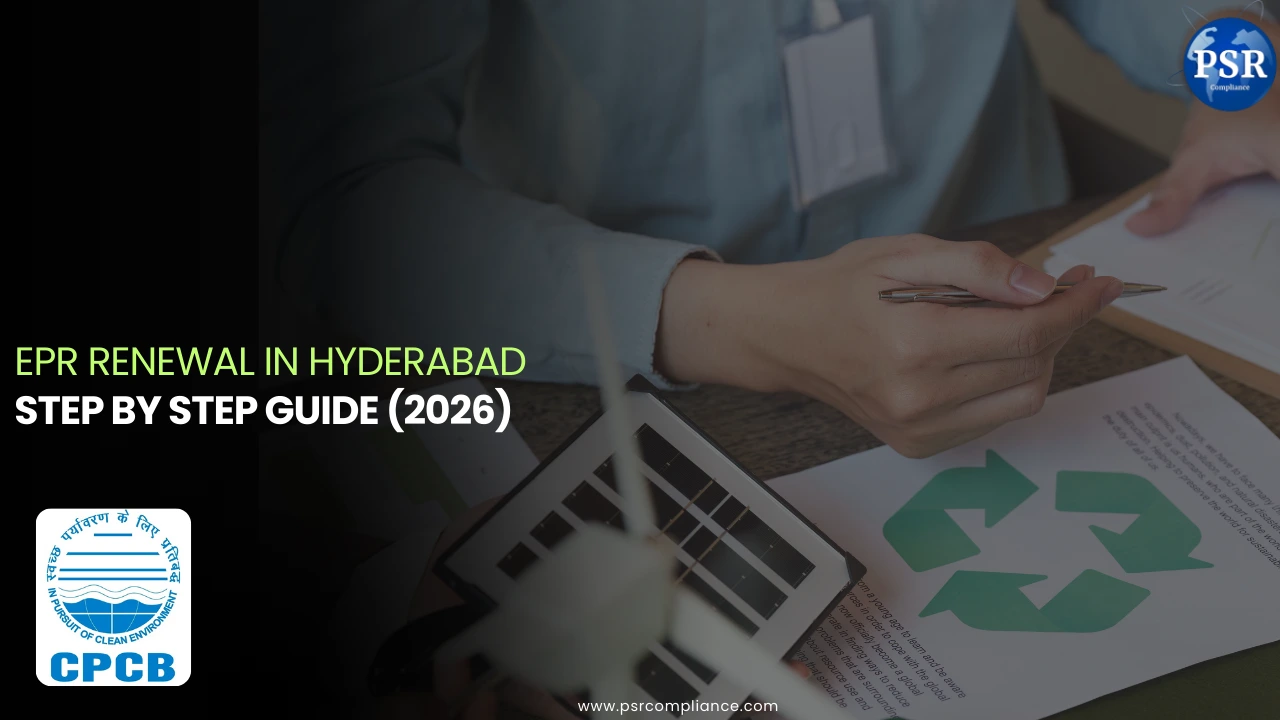
EPR Renewal in Hyderabad 2026 – Step by Step Process
Extended Producer Responsibility (EPR) renewal is an important compliance requirement for businesses dealing with products that generate waste. If your business is already registered under EPR, renewal ensures that your authorization remains valid and your operations continue without interruption.
In recent years, environmental regulations in India have become stricter, and authorities are closely monitoring EPR compliance. For businesses operating in Hyderabad, timely EPR renewal in 2026 is essential to avoid penalties, legal notices, or suspension of business activities.
This guide explains EPR renewal in Hyderabad in simple and clear language, covering who needs renewal, documents, process, timeline, benefits, and professional assistance.
What Is EPR Renewal?
EPR renewal is the process of extending an existing EPR authorization issued by the Central Pollution Control Board (CPCB). EPR registration is not a one-time approval. It is issued for a limited period and must be renewed before expiry.
Once an EPR certificate expires:
- Your business is considered non-compliant
- You may receive notices from CPCB or SPCB
- Portal access and filings can be restricted
- Renewal ensures your business remains legally authorized to manufacture, import, sell, or recycle products covered under EPR rules.
Why EPR Renewal Is Important in 2026
In 2026, EPR compliance is expected to be monitored more strictly due to:
⁃ Increased digital tracking through CPCB portals
⁃ Mandatory return filing and target monitoring
⁃ Stronger enforcement by pollution control authorities
Failure to renew on time can result in penalties, cancellation of authorization, or disruption in business operations. Timely renewal protects your business and helps maintain compliance continuity.
Who Needs EPR Renewal in Hyderabad?
Any entity that already holds an EPR authorization and continues its business activities must apply for renewal before expiry.
EPR renewal is required for:
➤ Producers manufacturing covered products
➤ Importers bringing regulated products into India
➤ Brand Owners selling products under their brand
➤ Authorized Recyclers and Waste Processors
If your business operates from Hyderabad or supplies products to this region, EPR renewal remains mandatory regardless of business size.
Types of EPR Covered Under Renewal
Depending on your business activity, EPR renewal may apply to:
➜ E-waste
➜ Tyre waste
➜ Other notified waste categories
Each category has specific compliance requirements and targets that must be fulfilled before renewal approval.
Documents Required for EPR Renewal
EPR renewal focuses on compliance history rather than fresh business registration. Authorities review whether EPR obligations have been met during the previous authorization period.
Common documents required include:
→ Existing EPR authorization certificate
→ Updated business details (if any changes)
→ Annual sales, import, or production data
→ Proof of EPR target fulfillment
→ Agreements with authorized recyclers
→ Return filing and compliance reports
EPR Renewal Process in Hyderabad
The EPR renewal process is conducted online through the CPCB portal. While the steps appear simple, accuracy is critical.
Step-by-Step Process:
Step 1: Review EPR Validity
Check the expiry date of your EPR certificate and compliance status.
Step 2: Data Preparation
Compile updated data related to sales, imports, recycling, and EPR targets.
Step 3: Online Application Submission
Submit the renewal application through the CPCB portal with all required documents.
Step 4: Compliance Review
Authorities verify past filings, target fulfillment, and documentation.
Step 5: Approval and Certificate Download
Once approved, the renewed EPR certificate can be downloaded from the portal.
Timely and accurate filing ensures smooth approval.
Timeline for EPR Renewal
The typical processing time for EPR renewal ranges between 15 to 30 working days. However, this may vary based on:
- Completeness of documents
- Compliance history
- Type of waste category
- Volume of data submitted
Common Mistakes Businesses Make During EPR Renewal
Many businesses face delays due to avoidable errors.
Frequent issues include:
- Missing compliance data
- Incorrect recycling agreements
- Mismatch in sales and target data
- Late application submission
- Improper portal filings
How PSR Compliance Helps with EPR Renewal
EPR renewal involves regulatory understanding, data accuracy, and correct portal filing. PSR Compliance supports businesses at every stage to ensure smooth renewal.
Support includes:
☑ Reviewing EPR status and eligibility
☑ Document preparation and verification
☑ CPCB portal filing and tracking
☑ Compliance review to reduce risk of notices
☑ Post-approval support and guidance
Final Thoughts
If your EPR certificate is approaching expiry or you are unsure about renewal requirements, it is best to act early.
📞 Contact PSR Compliance at 7065883416
Get expert support for EPR renewal in Hyderabad (2026) and stay fully compliant without delays or risks.
FAQs
1. What is the deadline for EPR renewal to avoid penalties?
EPR renewal must be applied at least 120 days before the current registration expires on the CPCB portal to avoid penalties or compliance issues.
2. When should PIBOs apply for EPR registration renewal on the CPCB portal?
Producers, importers, and brand owners should submit their renewal application at least four months before the existing EPR certificate expires.
3. What documents are required for EPR renewal in Telangana?
Required documents include updated sales/import data, existing EPR certificate, TSPCB Consent to Operate, recycler/PRO agreements, return filings, and updated GST, PAN, and CIN details.
4. Does the Telangana Pollution Control Board require state-specific documents for EPR renewal?
Yes, TSPCB requires a valid Consent to Operate and compliance reports relevant to the state for renewal.
5. What is the validity period of a renewed EPR certificate?
A renewed EPR certificate is generally valid for five years, provided annual compliance reporting is maintained.
6. What happens if I miss the EPR renewal deadline?
Missing the renewal can lead to Environmental Compensation penalties, suspension of authorization, product seizure, or cancellation of business licenses.
7. Are there penalties for late EPR renewal?
Yes, late renewal attracts Environmental Compensation charges based on delay duration and the amount of waste generated.
8. Are there government fees for EPR renewal in India?
Some categories have no fixed government fee, but processing fees may apply depending on waste tonnage and compliance requirements.
9. How much does it cost to renew an EPR certificate?
Renewal costs typically range from ₹10,000 to ₹50,000+, depending on waste type, tonnage, and professional compliance services.
10. Do I need to update plastic, e-waste, or battery waste data during EPR renewal?
Yes, updated data must be submitted, showing previous EPR targets were achieved for plastic, e-waste, or battery waste.