Mon, Jan 19 2026
Raju Karn
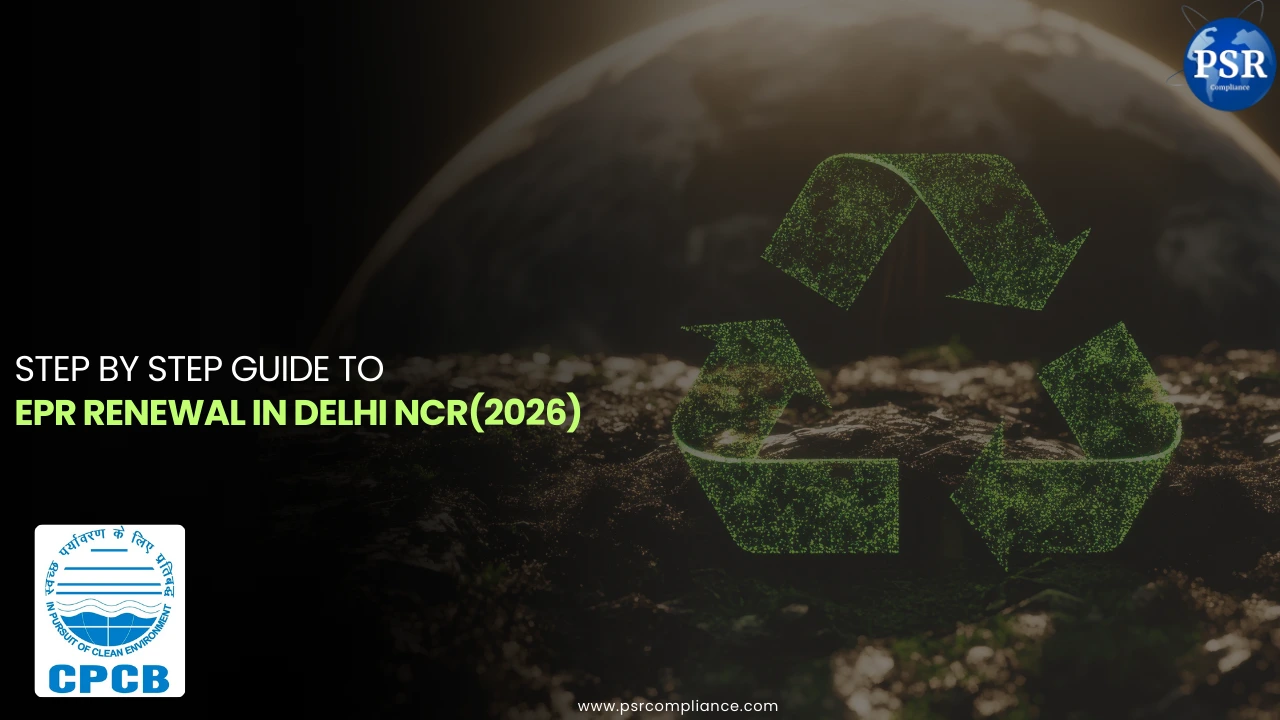
Step-by-Step Guide to EPR Renewal in Delhi NCR (2026)
If your business is registered under EPR (Extended Producer Responsibility) and your certificate is going to expire, you must renew it on time. Without renewal, your business may face notices, penalties, or even suspension of operations.
Many business owners in Delhi NCR feel confused about EPR renewal because of changing rules, online portals, and document requirements. This guide explains the EPR renewal process in Delhi NCR in very simple words, so anyone can understand it without legal confusion.
What Is EPR Renewal?
EPR renewal means extending your existing EPR approval so your business can continue operating legally.
If your EPR certificate expires:
- You cannot legally sell or distribute covered products
- Authorities may issue notices or penalties
- Your CPCB account may get suspended
- That is why renewal before the expiry date is very important.
Who Needs to Renew EPR in Delhi NCR?
You need to renew your EPR if you are already registered and your certificate has an expiry date.
This usually applies to:
➤ Producers who manufacture products
➤ Importers who bring products into India
➤ Brand owners selling products under their brand
➤ Businesses dealing in plastic, e-waste, batteries, or tyres
If your business operates in Delhi, Noida, Gurugram, Faridabad, or Ghaziabad, EPR renewal rules apply to you.
Benefits of Timely EPR Renewal
Renewing EPR on time helps your business:
⁃ Continue operations legally
⁃ Avoid fines and notices
⁃ Maintain good compliance records
⁃ Build trust with authorities and partners
It also keeps your business safe during inspections.
When Should You Apply for EPR Renewal?
It is best to apply for EPR renewal at least 3–4 months before the expiry date.
Applying early helps you:
● Avoid last-minute panic
● Prevent portal errors
● Stay safe from penalties
Late renewal often causes unnecessary trouble and delays.
Documents Required for EPR Renewal
For renewal, authorities mainly check your past compliance.
→ Common documents include:
→ Existing EPR certificate
→ Updated sales or import data
→ Proof of EPR target completion
→ Agreements with authorized recyclers or PROs
→ Consent to Operate (if required)
→ Return filing records
→ Keeping documents ready in advance makes the process smooth.
Step-by-Step EPR Renewal Process
Step 1: Login to the CPCB Portal
First, log in to the official CPCB EPR portal using your registered ID.
Step 2: Select the Renewal Option
Choose the EPR renewal option and check your current authorization details.
Step 3: Update Business & Waste Data
You must update:
- Sales or import quantities
- Waste category details
- Compliance records
Make sure the data is correct and matches your past filings.
Step 4: Upload Required Documents
Upload all supporting documents in the correct format.
Step 5: Submit the Application
After reviewing all details, submit the renewal application online.
Step 6: Review by Authorities
CPCB reviews your compliance history and documents.
Step 7: Approval & Certificate Download
Once approved, the renewed EPR certificate can be downloaded from the portal.
How Much Time Does EPR Renewal Take?
In most cases, EPR renewal takes 15 to 30 working days.
Time may increase if:
‣ Documents are incomplete
‣ Past compliance is not clear
‣ Data mismatch is found
Proper filing reduces delays.
What Happens If You Miss EPR Renewal?
Missing the renewal deadline can lead to:
▪ Environmental compensation penalties
▪ Suspension of EPR authorization
▪ Blocking of CPCB portal access
▪ Business interruption
That is why timely renewal is very important.
Common Mistakes to Avoid During EPR Renewal
Many businesses face delays due to simple mistakes:
❗ Wrong data entry
❗ Missing recycler agreements
❗ Late application submission
❗ Uploading outdated documents
Avoiding these mistakes saves time and stress.
How PSR Compliance Can Help You
EPR renewal rules and portals can be confusing, especially for busy business owners.
PSR Compliance helps by:
✓ Explaining EPR rules in simple language
✓ Checking documents before submission
✓ Handling CPCB portal filing
✓ Reducing risk of penalties and rejection
📞 Contact Number: 7065883416
FAQs on EPR Renewal in Delhi NCR
❓ Is EPR renewal required every year?
Yes, most EPR certificates—especially for plastic waste—are required to be renewed annually or periodically, as EPR registrations are time-bound.
❓ What is the deadline for EPR renewal in India?
Producers and Importers must apply for EPR renewal at least 120 days before the expiry of their existing EPR certificate.
❓ Where can EPR renewal be applied online?
EPR renewal applications must be submitted through the CPCB Centralized EPR Portal in India.
❓ What documents are required for EPR renewal?
Documents required for EPR renewal include the existing EPR certificate, updated company and GST details, annual return filings, and proof of fulfilled EPR targets.
❓ What happens if EPR renewal is delayed or missed?
Missing the EPR renewal deadline can result in penalties, cancellation of the EPR certificate, and restrictions on product sales.
❓ Is a PRO or PWP agreement mandatory for EPR renewal?
Yes, updated agreements with CPCB-registered Producer Responsibility Organisations (PROs) or Plastic Waste Processors (PWPs) are mandatory during renewal.
❓ How long does EPR renewal take in Delhi NCR?
The EPR renewal process in Delhi NCR typically takes 15 to 30 working days, depending on documentation and CPCB verification.