Sat, Jan 17 2026
Raju Karn
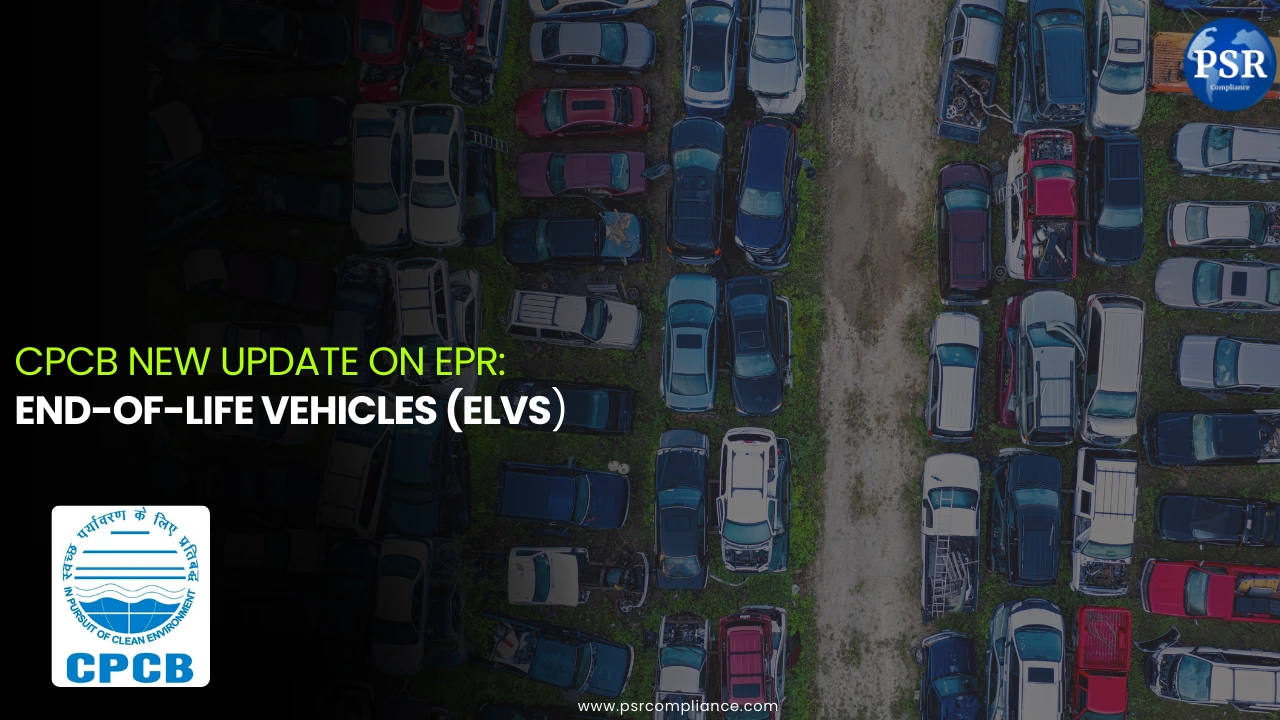
CPCB New Update on EPR: End-of-Life Vehicles (ELVs) Rules(2025) and Portal
The Central Pollution Control Board (CPCB) has introduced a new update related to Extended Producer Responsibility (EPR) for End-of-Life Vehicles (ELVs).
This update comes under the Environment Protection (End-of-Life Vehicles) Rules, 2025, notified by the Government of India on 6 January 2025 under the Environment (Protection) Act, 1986.
These rules are applicable from 1 April 2025 and are mainly focused on managing old and scrap vehicles in a safe and environmentally friendly way.
What Are End-of-Life Vehicles (ELVs)?
End-of-Life Vehicles are vehicles that:
- Have completed their usable life
- Are damaged or unfit to run
- Do not meet pollution or safety norms
Such vehicles, if not disposed of properly, can cause serious harm to the environment.
CPCB Has Launched a New EPR Portal
To implement the ELV EPR rules smoothly, CPCB has started a new online portal.
This portal is used to:
➜ Register entities covered under ELV EPR
➜ Track recycling and disposal activities
➜ Submit returns and compliance data
➜ Maintain transparency in the system
All required compliance will now be done online through this portal.
Who Needs to Register on the CPCB ELV EPR Portal?
The following people and businesses must register:
➤ Vehicle manufacturers
➤ Importers of vehicles
➤ Producers covered under EPR
➤ Authorised recyclers and dismantlers
Without registration on the CPCB portal, EPR compliance will not be accepted.
Key Responsibilities Under ELV EPR Rules, 2025
Responsibilities of Producers / Manufacturers
⁃ Ensure proper recycling of ELVs
⁃ Meet yearly EPR targets
⁃ File returns on the CPCB portal
⁃ Work only with authorised recyclers
Responsibilities of Recyclers / Dismantlers
⁃ Follow environmental safety norms
⁃ Maintain proper recycling records
⁃ Upload data on the CPCB portal
⁃ Dispose waste in a safe manner
What Is New in These ELV EPR Rules?
Separate rules for End-of-Life Vehicles
‣ Online compliance through CPCB portal
‣ Clear responsibility on producers
‣ Better monitoring by CPCB and SPCBs
‣ Strong action in case of non-compliance
Penalty for Not Following ELV EPR Rules
If any entity does not follow these rules:
▪ Environmental penalties may be imposed
▪ Registration may be cancelled
▪ Legal action can be taken under environmental laws
Why This Update Is Important
This update helps in:
- Reducing environmental pollution
- Improving recycling systems
- Creating accountability
- Supporting India’s sustainability goals
How PSR Compliance Can Help
Understanding ELV EPR rules and CPCB portal requirements can be confusing for many businesses. PSR Compliance supports companies by simplifying the compliance process and helping them meet regulatory requirements correctly.
PSR Compliance helps by:
✔ Explaining ELV EPR rules in simple language
✔ Assisting with CPCB portal registration
✔ Supporting return filing and ongoing compliance
✔ Reducing the risk of notices and penalties
Not sure how the new CPCB ELV EPR rules apply to your business?
Talk to a compliance expert and get clear guidance on registration, portal filing, and EPR responsibilities—without confusion or guesswork.
📞 Call PSR Compliance at 7065883416
FAQs
1. What is an End-of-Life Vehicle (ELV)?
An End-of-Life Vehicle (ELV) is a vehicle that is no longer registered, declared unfit by transport authorities, or voluntarily discarded by the owner because it is unsafe, non-compliant, or uneconomical to operate.
2. What is the age limit for vehicles to be considered ELV in India?
In India, petrol vehicles older than 15 years and diesel vehicles older than 10 years in Delhi-NCR are generally considered End-of-Life Vehicles, subject to fitness test and regional regulations.
3. How can I check if my car is officially an ELV?
A car is considered an ELV if it fails the fitness test, is declared unfit by the RTO, or is too old or damaged to be economically repaired.
4. Where should an End-of-Life Vehicle be scrapped?
End-of-Life Vehicles must be scrapped only at government-authorized Registered Vehicle Scrapping Facilities (RVSFs) or approved collection centers.
5. What documents are required to scrap an old vehicle?
To scrap an old vehicle, you generally need the Registration Certificate (RC), owner’s identity proof, and vehicle details to obtain a Certificate of Deposit.
6. What happens if I do not scrap my ELV?
If an ELV is not scrapped, authorities may impose fines, towing charges, cancel registration, or restrict vehicle use, especially in areas with strict pollution rules.
7. What is the scrap value of an old vehicle?
The scrap value of a vehicle depends on its weight, condition, and reusable parts such as metal components and the engine.
8. Are there benefits for scrapping an old vehicle?
Yes, scrapping an old vehicle can offer incentives like registration fee waivers and motor vehicle tax concessions when purchasing a new vehicle.
9. Can I sell my ELV to another state instead of scrapping it?
Selling an End-of-Life Vehicle to another state is generally illegal if the vehicle has been declared unfit or deregistered by authorities.
10. Why is the government enforcing ELV scrappage rules?
The government enforces ELV scrappage rules to reduce air pollution, improve road safety, and ensure environmentally safe recycling of old vehicles.